Boat Anchors: Selection and Ordering Guide
What Are Boat Anchors?
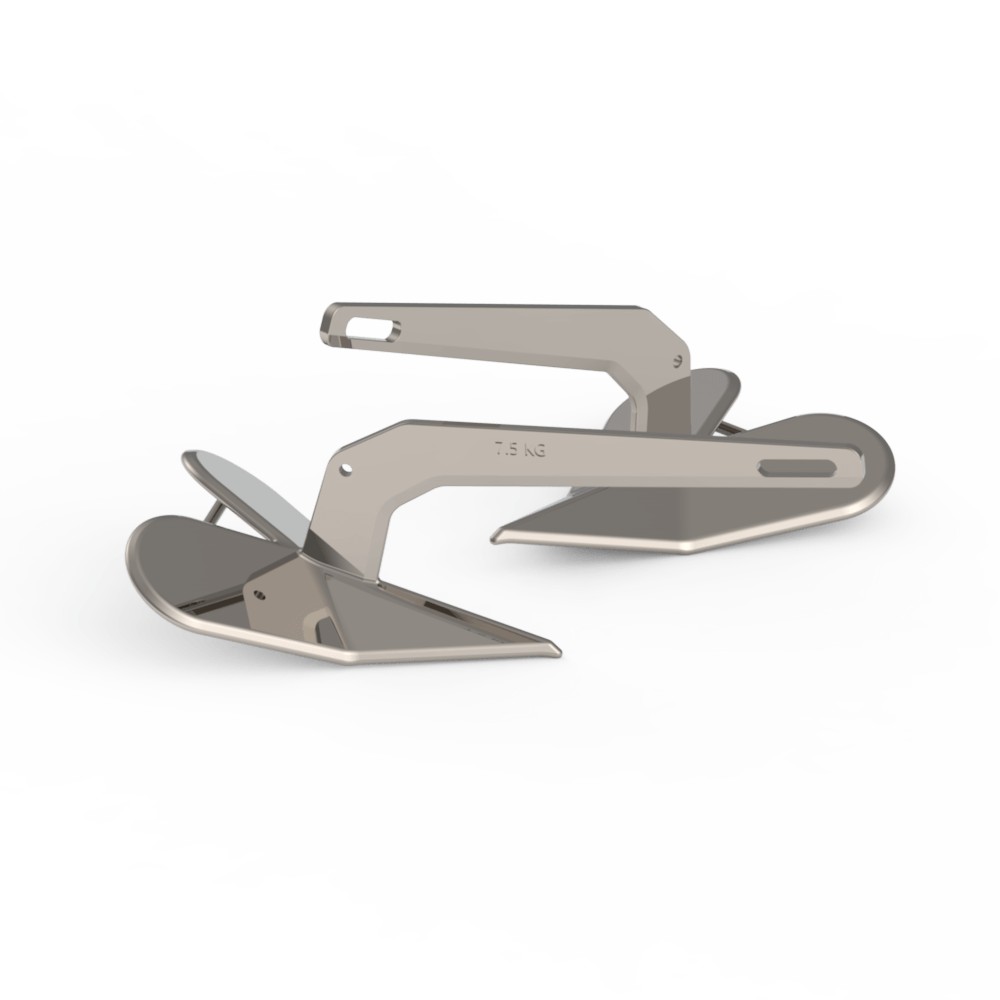
Compare claw, fluke and plough forms with the intended anchoring system and storage arrangement. This range includes Claw Anchor L5001, Fluke Anchor L5002, Plough Anchor L5003. Compare the referenced forms by the actual mounting and connection requirements. Confirm the selected drawing, material and complete supply scope with Foundry Queen before ordering.
Anchor form and system selection
Claw, fluke and plough describe different anchor geometries. Their shapes affect how they are handled, stored and paired with an anchoring system. The choice must consider the vessel and intended service, including the expected bottom conditions and the complete rode arrangement. This catalogue comparison does not prescribe an anchor for a particular vessel. Use the accepted model drawing and appropriate application guidance for the actual installation. Product mass is an identification characteristic, not a certified holding force or a universal selection rule.
Claw L5001 references
L5001 is the claw anchor reference used here. Compare the shank, claw outline and attachment point with the proposed roller and storage location. The source table contains a repeated 2 kg entry for one row. Keep that ambiguity visible in the enquiry and confirm the intended variant rather than filling in an assumed missing mass. The shape and dimensions must match the accepted version. Do not use another manufacturer’s familiar trade name as a claim about the origin or authenticity of this product.
Fluke and plough references
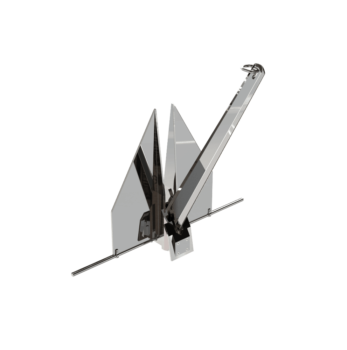
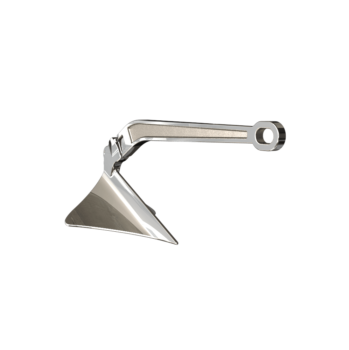
L5002 covers the fluke anchor form and L5003 the plough form. One first-row source entry under the fluke listing carries a different L5005-01 code, which should be resolved before ordering that version. Check shank clearance, attachment dimensions and stowage compatibility for both families. A nominally similar mass does not guarantee the same outline or fit in a roller. Confirm the dimensions and complete proposed supply with the quotation. Any required performance documentation must relate to the actual offered model.
Match the mounting surface
Inspect the actual supporting surface before specifying the fitting. Record its thickness, condition, curvature and available access from the reverse side. Identify any backing, reinforcement or fastener arrangement that belongs to the complete installation. The catalogue component does not describe the strength of the structure beneath it. For replacement work, compare the existing hole pattern with the proposed drawing and identify any previous damage or modification. Agree the mounting preparation before machining, drilling or cutting the surface. Keep the accepted installation details with the model schedule.
Define material and finish separately
State the required material specification and finish in the enquiry. The source product names and photographs do not establish a particular stainless steel grade for every version, so the quotation must confirm the actual offered alloy. A mirror-like surface is a visual finish and does not identify material chemistry. Consider the intended environment, adjacent materials, cleaning requirements and any required documentation. Ask for evidence that relates to the proposed supply rather than treating a broad marine label as proof of corrosion resistance or suitability for every exposure condition.
Check dimensions and mating components
Use a dimensioned drawing to establish the interfaces that control assembly. Overall length, fixing centres, opening size, thread designation and insertion depth describe different features and should not be mixed. State the units and identify the version associated with each dimension. Where a catalogue table contains an inconsistent model code or value, resolve it with the supplier before ordering. Check mating parts as a complete connection, including seals, pins, screws, hoses or tubes where relevant. A matching nominal dimension alone does not confirm that two parts fit together.
Agree the complete supply scope
List the components required for each installation position. State whether the enquiry is for a fitting body alone or an assembly with fasteners, covers, seals and other accessories. Photographs may show components used to illustrate the application without defining what is included. Confirm quantities per assembly as well as the total order quantity. Record any requested inspection documents, marking, packaging and destination requirements with the quotation. These details allow the delivered parts to be checked against an agreed schedule instead of an informal product description.
Review ratings and application evidence
Keep dimensional catalogue information separate from verified performance evidence. Component mass, nominal size and material appearance are not load ratings. Where the application requires a working load, sealing capability or other performance characteristic, identify the requirement and ask for relevant documentation for the exact offered configuration. Review the supporting structure and connected equipment as part of the installation. Do not extend a claim from one model, material or assembly to another without evidence. Seek appropriate technical review for the intended marine use before relying on an unverified catalogue comparison.
Prepare a clear product enquiry
Give each item a model reference and installation position, then add quantity, drawing revision, dimensions, material and finish. Include photographs that show the complete existing arrangement when replacing a part. Mark any unresolved interface or catalogue discrepancy clearly. Foundry Queen can use this schedule to organise the enquiry and identify the details that need confirmation for the proposed supply. Keep the accepted drawings, accessory list and quotation together so that purchasing, receipt and installation refer to the same agreed configuration.
Compare the referenced products
- Claw Anchor L5001: L5001 is a claw-form anchor with a shaped crown and shank attachment slots. The source table contains a repeated 2 kg entry at the fourth code, so that row is not treated as a confirmed size. Select the actual model using an agreed dimension and mass schedule.
- Fluke Anchor L5002: The L5002 reference is a fluke-form anchor with a long shank and transverse stock. Most rows use L5002 codes, while the first row uses L5005-01. Keep that numbering discrepancy open for confirmation instead of assigning the unmatched row to this series by assumption.
- Plough Anchor L5003: L5003 is a plough-form anchor family shown with an articulated connection between shank and head. Its reference mass options run from 2 to 50 kg. Anchor mass is a product identifier and does not by itself state holding performance or suitability for a vessel.
Discuss your selected configuration
Send Foundry Queen your model schedule and drawings. Include the intended service, installation position, quantities and the interfaces still requiring confirmation. The accepted drawing and agreed supply details should determine the final order.