Glass hinges connect a moving panel to a wall, fixed glass panel or gate support. Compare the plate layout, pivot direction, glass cutout and material together. Select the correct configuration for the opening before choosing a surface finish.


Glass hinges connect a moving panel to a wall, fixed glass panel or gate support. Compare the plate layout, pivot direction, glass cutout and material together. Select the correct configuration for the opening before choosing a surface finish.
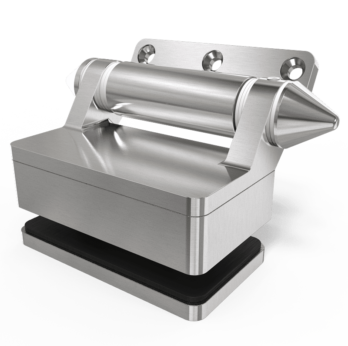
A cylindrical hinge barrel sits above one glass clamping leaf and a three-hole mounting plate. The PGH-SA configuration uses a rounded rectangular clamp body, so its glass contact and mounting-hole pattern should be reviewed together. The reference glass range is 8mm-12mm. Review the PGH-SA plate footprint, pivot clearance, mounting arrangement and matching glass preparation before selecting material or finish. Include the opening layout, quantities and required finish with your enquiry. The product page keeps the configuration information together so a similar-looking leaf or different surface colour is not mistaken for an interchangeable fitting. Confirm the selected drawing and complete door arrangement before ordering.
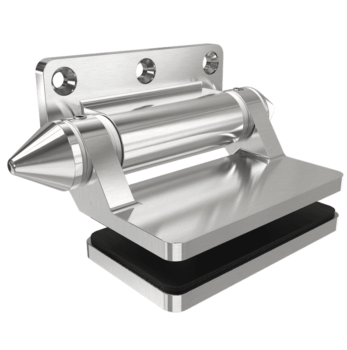
The PGH-W90A reference combines a cylindrical barrel, a broad glass clamp and an offset mounting plate. Its 90-degree arrangement should be selected against the closed gate position and available swing clearance. The reference glass range is 8mm-12mm. Review the PGH-W90A plate footprint, pivot clearance, mounting arrangement and matching glass preparation before selecting material or finish. Include the opening layout, quantities and required finish with your enquiry. The product page keeps the configuration information together so a similar-looking leaf or different surface colour is not mistaken for an interchangeable fitting. Confirm the selected drawing and complete door arrangement before ordering.

A square glass-clamping leaf pivots on a wall-mount base plate. The SHC-90LM configuration is intended for a glass-to-wall junction and requires a matching glass cutout; review the current fabrication drawing before tempering. The reference glass range is 8–10 mm tempered glass. Review the SHC-90LM plate footprint, pivot clearance, mounting arrangement and matching glass preparation before selecting material or finish. Include the opening layout, quantities and required finish with your enquiry. The product page keeps the configuration information together so a similar-looking leaf or different surface colour is not mistaken for an interchangeable fitting. Confirm the selected drawing and complete door arrangement before ordering.
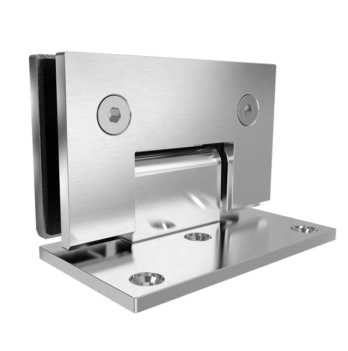
The SHC-90LS family uses a compact glass-clamping leaf and a right-angle wall mounting plate. The black SHC-90LSB reference is treated as a finish or configuration option within this family, with the exact plate dimensions to be confirmed. The reference glass range is 8mm-10mm. Review the SHC-90LS plate footprint, pivot clearance, mounting arrangement and matching glass preparation before selecting material or finish. Include the opening layout, quantities and required finish with your enquiry. The product page keeps the configuration information together so a similar-looking leaf or different surface colour is not mistaken for an interchangeable fitting. Confirm the selected drawing and complete door arrangement before ordering.

Two glass-clamping leaves meet at a nominal 90-degree corner. The SHC-90M reference supports a glass-to-glass junction with a straight-sided plate profile, rather than a leaf screwed directly to a wall. The reference glass range is 8mm-10mm. Review the SHC-90M plate footprint, pivot clearance, mounting arrangement and matching glass preparation before selecting material or finish. Include the opening layout, quantities and required finish with your enquiry. The product page keeps the configuration information together so a similar-looking leaf or different surface colour is not mistaken for an interchangeable fitting. Confirm the selected drawing and complete door arrangement before ordering.

Two padded glass-clamping leaves form the SHC-90S right-angle arrangement. Compare the plate footprint and pivot clearance with the SHC-90M version on a dimensioned drawing instead of selecting by polish alone. The reference glass range is 8mm-10mm. Review the SHC-90S plate footprint, pivot clearance, mounting arrangement and matching glass preparation before selecting material or finish. Include the opening layout, quantities and required finish with your enquiry. The product page keeps the configuration information together so a similar-looking leaf or different surface colour is not mistaken for an interchangeable fitting. Confirm the selected drawing and complete door arrangement before ordering.
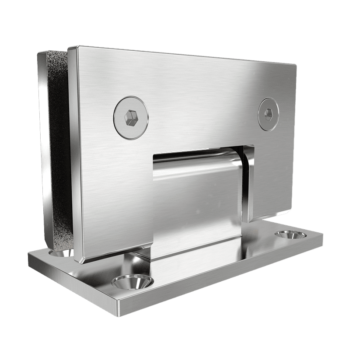
A glass-clamping leaf pivots from a broad T-profile wall mounting plate. The SHC-90TM reference separates the wall anchor interface from the padded glass interface; both need confirmation for the selected opening. The reference glass range is 8mm-10mm. Review the SHC-90TM plate footprint, pivot clearance, mounting arrangement and matching glass preparation before selecting material or finish. Include the opening layout, quantities and required finish with your enquiry. The product page keeps the configuration information together so a similar-looking leaf or different surface colour is not mistaken for an interchangeable fitting. Confirm the selected drawing and complete door arrangement before ordering.
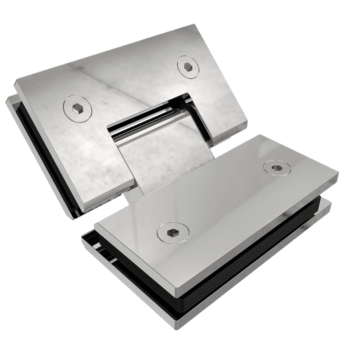
Two glass-clamping leaves form the nominal 135-degree SHC-135S junction. This angled layout should match the fixed-panel position and closed door line, with the final cutout and swing envelope checked before glass fabrication. The reference glass range is 8mm-10mm. Review the SHC-135S plate footprint, pivot clearance, mounting arrangement and matching glass preparation before selecting material or finish. Include the opening layout, quantities and required finish with your enquiry. The product page keeps the configuration information together so a similar-looking leaf or different surface colour is not mistaken for an interchangeable fitting. Confirm the selected drawing and complete door arrangement before ordering.
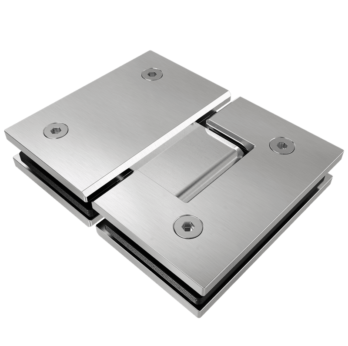
The SHC-180M reference places two glass-clamping leaves in an in-line arrangement. Its central pivot and plate profile should be checked against the intended 180-degree closed configuration and panel cutouts. The reference glass range is 8mm-10mm. Review the SHC-180M plate footprint, pivot clearance, mounting arrangement and matching glass preparation before selecting material or finish. Include the opening layout, quantities and required finish with your enquiry. The product page keeps the configuration information together so a similar-looking leaf or different surface colour is not mistaken for an interchangeable fitting. Confirm the selected drawing and complete door arrangement before ordering.

The SHC-180S family joins two glass-clamping leaves in an in-line arrangement. The black SHC-180SB reference is included as a finish or configuration option; match its plate and pivot dimensions to the selected drawing. The reference glass range is 8mm-10mm. Review the SHC-180S plate footprint, pivot clearance, mounting arrangement and matching glass preparation before selecting material or finish. Include the opening layout, quantities and required finish with your enquiry. The product page keeps the configuration information together so a similar-looking leaf or different surface colour is not mistaken for an interchangeable fitting. Confirm the selected drawing and complete door arrangement before ordering.
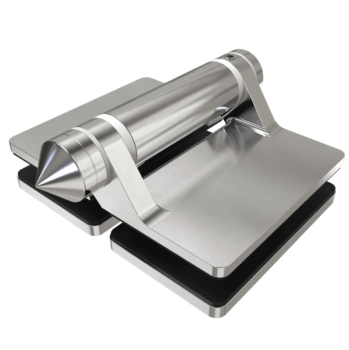
A cylindrical barrel connects one padded glass clamp to a mounting leaf. The LS-GG-2 gate reference should be selected by its glass interface, mounting support and closing requirements as a complete gate arrangement. The reference glass range is 8mm-12mm. Review the LS-GG-2 plate footprint, pivot clearance, mounting arrangement and matching glass preparation before selecting material or finish. Include the opening layout, quantities and required finish with your enquiry. The product page keeps the configuration information together so a similar-looking leaf or different surface colour is not mistaken for an interchangeable fitting. Confirm the selected drawing and complete door arrangement before ordering.
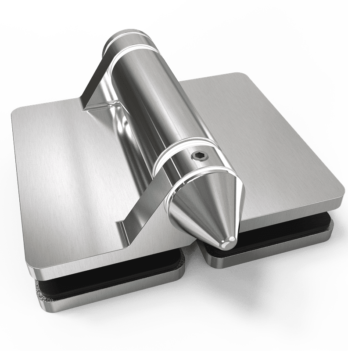
Two padded glass-clamping leaves connect through a cylindrical barrel in the PGH-180A arrangement. Specify the glass-to-glass junction and closed-panel line before choosing the hinge material and finish. The reference glass range is 8mm-12mm. Review the PGH-180A plate footprint, pivot clearance, mounting arrangement and matching glass preparation before selecting material or finish. Include the opening layout, quantities and required finish with your enquiry. The product page keeps the configuration information together so a similar-looking leaf or different surface colour is not mistaken for an interchangeable fitting. Confirm the selected drawing and complete door arrangement before ordering.
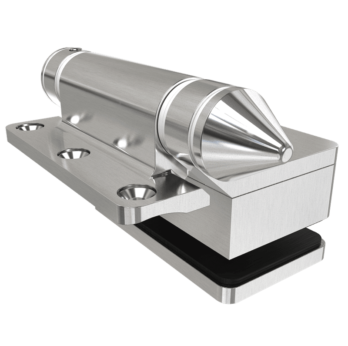
The PGH-RA configuration combines a cylindrical barrel, one glass-clamping leaf and a three-hole mounting plate. Its plate shape differs from the PGH-SA reference, so confirm the support footprint and fixing access. The reference glass range is 8mm-12mm. Review the PGH-RA plate footprint, pivot clearance, mounting arrangement and matching glass preparation before selecting material or finish. Include the opening layout, quantities and required finish with your enquiry. The product page keeps the configuration information together so a similar-looking leaf or different surface colour is not mistaken for an interchangeable fitting. Confirm the selected drawing and complete door arrangement before ordering.
Project with
Foundry Queen
Hinge selection starts with the complete opening: panel dimensions, glass build-up, support construction and intended door movement. Check the plate footprint, pivot clearance and glass cutout against the selected drawing. Material and finish should match the installation conditions. Foundry Queen enquiries can include a layout, quantities and finish schedule so that the proposed hinge, contact pads, mounting components and packaging scope can be identified together. Do not infer door capacity or compliance from a product photograph alone.
A hinge is part of the complete opening rather than an isolated decorative fitting. Start with the moving panel, fixed support and required swing. Glass-to-wall, glass-to-glass and gate arrangements create different interfaces even when the external finish looks similar. Foundry Queen enquiries should identify those interfaces before a particular hinge is selected. The range below groups thirteen reference configurations by plate profile, pivot arrangement and product code. Finish options stay with their associated configuration so that a black or polished example does not become a misleading extra product. Confirm the final drawing, material and supply scope for the version being ordered.
One hinge leaf grips a prepared glass panel through matching contact components. The other leaf may connect to a wall, another glass panel or an independent gate support. That difference controls the mounting details that need review. A wall plate needs a suitable supporting construction and compatible fixing arrangement. A glass-to-glass hinge needs correctly prepared interfaces on both panels. A gate hinge must also be coordinated with the surrounding fence or screen. Record the complete opening in one drawing so that the hinge position, panel edges and nearby fittings can be checked together.
Wall-mounted references include the square SHC-90LM, compact SHC-90LS family and T-plate SHC-90TM. Their mounting plates and glass-clamping leaves differ, so compare the selected drawings instead of assuming that the fixing positions match. Glass-to-glass references use padded clamping leaves on both sides of the pivot. The supporting fixed panel, its own restraint and the moving door need review as a complete arrangement. A fitting described by an angle does not by itself identify every installation dimension or establish that it can replace a different hinge.
The 90, 135 and 180 degree references help distinguish the intended junction between leaves or panels. They should be considered alongside the closed-door line and the full swing envelope. Confirm which angle the selected drawing describes. Check clearance at handles, seals, stops and adjacent glass during movement. A corner opening and an in-line opening can require different pivot positions even when both use rectangular plates. Do not select a hinge solely from a photograph taken at an open angle; the final mounting and closed configuration must be stated.
Most SHC references in this selection list 8 to 10 mm glass, while the listed PGH gate references and LS-GG-2 use an 8 to 12 mm reference range. The selected version, contact pads and glass build-up must be confirmed together. Obtain the exact hole and cutout drawing before fabrication. A nominal thickness range does not mean every glass type or construction is interchangeable. In particular, the SHC-90LM reference identifies tempered glass and a template for preparation. State the actual glass specification when requesting a configuration review.
A square base, compact right-angle plate and broad T-profile plate can put fixing positions in different locations. Measure the available support area and identify the substrate before selecting the hinge. Include edge clearances, access for tools and the position of joints or finishes on the supporting surface. Confirm the mounting components intended for that version. A hinge leaf that fits the glass may still have the wrong support interface. Keep the wall plate outline and the glass cutout on the same installation drawing so the two interfaces are not reviewed separately.
The PGH-SA, PGH-W90A, LS-GG-2, PGH-180A and PGH-RA references use cylindrical barrel arrangements. Some combine a mounting plate with a single padded glass clamp, while the PGH-180A reference connects two glass-clamping leaves. Their names and photographs help identify the family, but the final plate geometry, fixing pattern and required closing action still need confirmation. If a spring or controlled closing function is required, describe that requirement explicitly and confirm the selected mechanism. Do not infer a particular closing performance from the barrel appearance alone.
SHC wall and glass-mounted families use rectangular clamping plates around the pivot. Compare the SHC-90M and SHC-90S versions by drawing, then examine the SHC-135S and in-line SHC-180M or SHC-180S arrangements for angled or straight junctions. The compact SHC-90LS family includes a black reference as an option rather than a separate product page. Likewise, the black SHC-180SB reference stays with the SHC-180S family. Confirm any dimensional or component differences between those versions on the quotation before treating them as interchangeable.
The selected stainless steel grade should be stated in the order rather than left to a general product description. Several reference families list 304, 316, 316L or duplex 2205 options. Availability and the actual supplied grade need confirmation for the selected configuration. Identify whether the opening is indoors, outdoors or near a pool, and describe its cleaning and exposure conditions. Material choice is only one part of the assembly. Contact components, fasteners, finishes and adjoining materials also need to suit the intended environment.
Polished, satin, black, gold and white references can offer different appearance options within a family. The SHC-90LM source also lists named plated and brushed finishes. Confirm the finish process, colour reference and availability for the version being ordered. Where several fittings will be visible together, request a coordinated finish schedule and identify the parts that need to match. A finish photograph should support a selection discussion rather than replace a sample or approved specification. Changing the colour does not establish a different mounting geometry or door capacity.
Reference unit weights help identify a configuration and discuss packing, but they are not allowable door weights. The complete door arrangement depends on its dimensions, glass specification, hinge positions, support and other components. Specify the number of hinges and the intended opening conditions in the enquiry. Any capacity evidence or installation limit should relate to the selected configuration and complete arrangement. Avoid transferring a value from one product family to another simply because their plates look alike. Confirm the final requirements before the glass or support is fabricated.
Send the product code, panel dimensions, glass thickness and type, opening direction and closed-panel angle. Include the supporting wall or fixed-panel arrangement and show the hinge positions. Add the number of openings, required quantities, preferred material and finish, and delivery destination. If there are special closing, access or cleaning requirements, state them at the same time. A complete schedule makes it easier to identify what the quotation includes and which details still need a selected drawing. Keep revisions of the drawing clearly labelled so the ordered version remains traceable.
Coordinate the hinge with the handle, locks, seals, stops and nearby glass fittings. Check that those components can be installed and operated without interfering with the hinge movement. For a gate, include the latch and the supporting fence arrangement. For an enclosure, include the fixed-panel layout and contact clearances. Review the complete opening before ordering individual fittings. This category links each configuration to its own detail page so that the product image, technical reference and enquiry information remain together. Use the relevant page rather than mixing specifications across different models.
Before confirming an order, review the current drawing, material grade, finish, contact components, mounting parts and packing scope. Keep the product code with the drawing and note any finish or configuration options that were agreed. Check the final glass preparation before fabrication and ensure that the installation information relates to the supplied version. Foundry Queen can organise the product enquiry around these details without treating an individual photograph as evidence for a complete installed system. Send the opening schedule and required quantity through the contact page to begin that review.