 By Coco
Glass clamp materials should be verified against a written specification, not selected by shine, color or a single magnet test. Two fittings can look similar while carrying different material descriptions, finishes or manufacturing histories. This Foundry Queen guide explains how a buyer can request useful material evidence and keep it connected to the actual glass hardware order.
Define the material requirement before testing
Identify the component being checked: clamp body, cover, screws, pins or another accessory. A fitting assembly may contain several materials. If a quotation describes only the body material, do not assume that the same description applies to every included item.
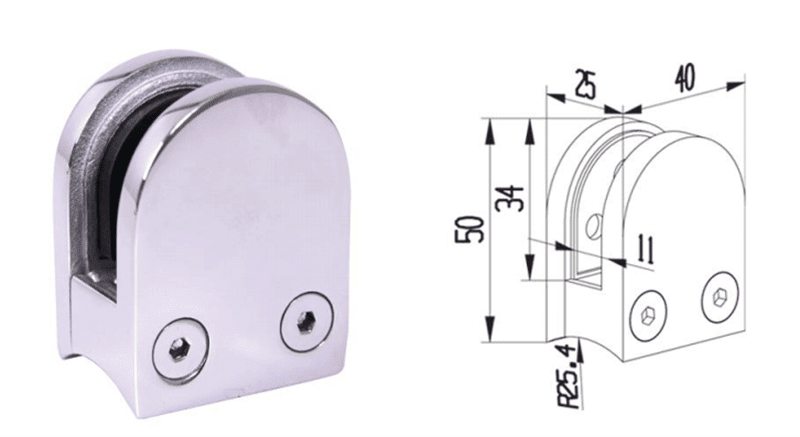
Use an identified product such as the D-shaped glass clamp L6003 and confirm its offered specification. The glass clamps category can help identify shapes and applications, but a product name is not a material certificate. State the required grade, applicable product specification and any delivery-condition requirements in the order.
Do not use appearance as alloy identification
Polished, brushed and coated surfaces can change how a fitting looks without proving what alloy is underneath. A finish sample is useful for appearance acceptance, while material evidence serves a different purpose. Keep those approvals separate.
The Australian Stainless Steel Development Association explains that appearance is not a reliable stainless grade indicator. It also notes that unexpected performance can involve finish, design or fabrication, rather than composition alone. A material investigation should therefore preserve the service and handling information instead of assuming that every stain proves the wrong alloy.
What a magnet can and cannot tell you
A magnet may help sort materials, but it cannot uniquely identify a stainless grade. ASSDA describes how stainless families differ in magnetic response and how cold work can produce a response in austenitic stainless steel. Therefore, “magnetic means fake stainless” is an unreliable acceptance rule.
Do not use a weak or absent attraction to certify a fitting as 304, 316 or another grade. Equally, do not reject a specified stainless product solely because it attracts a magnet without understanding the required material and its condition. If grade identity matters, choose a suitable verification method and interpret the result against the specification.
| Evidence or check | Useful purpose | Important limitation |
|---|---|---|
| Appearance or finish sample | Agree color, texture and visible-surface expectations. | Cannot establish alloy composition. |
| Magnetic response | Support preliminary sorting or an investigation. | Does not uniquely identify a stainless grade. |
| Traceable material documentation | Connect the supplied component or batch to the ordered specification. | Must correspond to the actual delivered items and required scope. |
| Suitable material analysis | Check the elements or properties covered by the chosen method. | Method, limitations, sampling and acceptance criteria must be agreed. |
Request documents that match the delivered fittings
Ask the supplier how material records connect to the order, batch and product. A generic certificate image from a catalogue does not identify the fittings in your shipment. Agree whether the required evidence relates to raw material, a casting batch or finished components, and what traceability will be maintained through finishing.
Check that the offered designation is the required one. Cast and wrought product specifications should not be exchanged casually. If the manufacturer proposes an equivalent grade, request an explicit comparison and approval rather than treating a familiar commercial name as a complete technical specification.
Choose testing for the actual question
Tell a qualified testing provider what you need to distinguish and which requirement governs acceptance. Request the method, tested elements or properties, sample identity and limitations in the report. The right method for separating broad alloy families may not answer a question about every requirement of a particular grade.
ASSDA notes that differentiating low-carbon and standard-carbon grades can require full laboratory analysis. This illustrates why a basic screening result should not be stretched beyond its capability. Avoid destructive or chemical experiments on installed hardware; arrange professional testing on appropriately identified samples where testing is required.
Keep grade selection separate from system approval
Even confirmed material composition does not prove the complete fitting is suitable for a particular glass barrier. Glass compatibility, contact inserts, fasteners, supporting construction and the installation design remain separate checks. Material evidence answers a material question, not every structural or service question.
Review another product such as the rounded glass clamp L6007 as a separate model rather than assuming that a similar finish makes it interchangeable. For broader context, visit construction hardware components. The selected system should be reviewed by the responsible project professional.
Compare price with the evidence included
A meaningful glass clamp price comparison uses the same material, finish, supplied accessories and verification scope. Ask the factory or supplier to state exclusions. If testing or a particular document is required, include it in the enquiry so that one offer is not compared unfairly with an undocumented alternative.
For an exporter’s shipment, agree product identification and packing labels that remain useful after receiving. Keep different grades, models and finishes clearly separated. A traceable receipt process helps prevent a documented material from becoming uncertain through mixed storage.
Frequently asked questions
Can a magnet distinguish 304 from 316? It is not a reliable standalone grade-identification method. Use the specified documents and a suitable analysis where confirmation is needed.
Does a colored coating identify the base metal? No. Specify the underlying material and the finish separately.
What if the material report and product label disagree? Hold the affected items for clarification and preserve their identity. Resolve the discrepancy against the purchase requirements before accepting the shipment.
What should I send Foundry Queen? Provide the clamp model, material specification, service context and required evidence. Identify whether you need a routine supply quotation, document review or a testing proposal; these are different scopes.
Technical references
Topic reference: Easiahome’s glass clamp material article. Grade-verification principles: ASSDA, Testing for Grade Confirmation and Magnetic Effects of Stainless Steels. General guidance does not certify an individual Foundry Queen product or shipment.
Get Premium Casting Products
Join FoundryQueen.com Newsletter to get more information of different premium OEM Casting products in China.