 By Coco
Glass clamps are often grouped by visible shape, but shape alone is a weak basis for selection. Two square fittings can have different mounting faces, insert sets and panel requirements. Foundry Queen recommends classifying the connection by its interfaces first, then choosing the appearance within an approved configuration.
Use shape as an identifier, not a rating
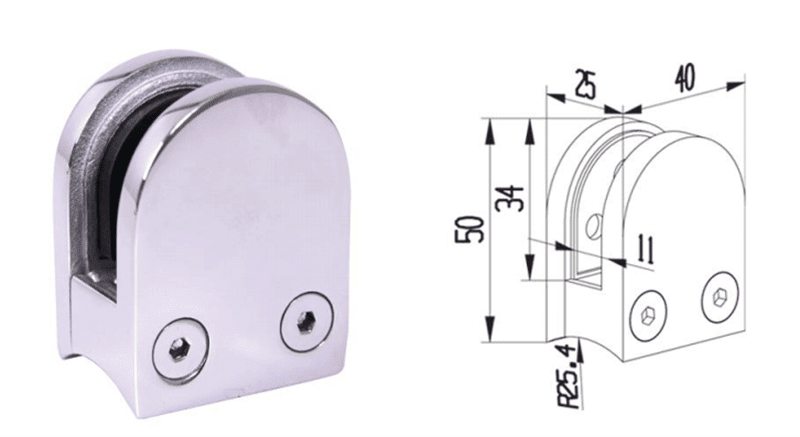
D-shaped, rounded and square descriptions help buyers recognize a product family. They do not establish capacity, material grade or compatibility with a particular panel. Keep the exact model reference alongside the shape description in every enquiry.
Compare the L6003 D-shaped clamp and L6007 rounded clamp as identifiable catalogue products. Any choice for an installed system still needs the model-specific drawing and the designer’s approval.
Match the back face to the support
Identify whether the support is a flat plate, a round post or another profile. A curved back is intended to mate with a particular profile arrangement; it is not automatically compatible with every round support. Confirm the exact geometry and fixing position.
Ask whether an adapter is required and whether it is part of the quoted supply. An assembly with an undocumented gap or improvised spacer is a different connection from the approved drawing. Resolve that difference before the clamp reaches the installation stage.
Check the panel and retention details
State the glass specification, thickness and preparation. Confirm the correct inserts and any required holes or retention components for the exact system. Do not remove a pin or substitute an insert merely because the panel appears to fit more easily.
Where the same external body is offered in several configurations, require the quote to identify the supplied version. This prevents ordering a familiar shell while receiving different internal pieces. Keep the component drawing and packing reference linked to the panel schedule.
Separate finish from material
A mirror finish, satin texture or colored coating describes appearance. It does not prove the underlying alloy or manufacturing route. Specify the material separately and agree the evidence needed for identification and traceability.
For coordinated architectural hardware, approve finish samples under the same viewing conditions. Different shapes and production methods can reflect light differently even when their nominal finish description is the same. Define what variation is acceptable before shipment.
Example: identical shape, different internal configuration
Two square clamp bodies may appear identical in a catalogue while being supplied with different inserts or retention pieces. A purchase order that names only the body shape can therefore remain ambiguous. Require the model and configuration to appear in the quote and packing reference. Compare the complete assembly drawing with the panel requirement before accepting the parts, even if the external appearance matches the approved sample.
Build a useful comparison matrix
For each candidate, list the model, support profile, glass interface, included accessories and installation information. Add the required project evidence and identify any unresolved item. The matrix should make differences visible instead of compressing every product into a single price column.
When ordering replacements, use records from the installed assembly. A fitting selected only because its outline resembles the original can introduce a hidden interface mismatch. If records are missing, provide photographs and measurements for identification, then obtain approval before substituting parts.
Enquiry checklist
| Selection axis | Required description |
|---|---|
| Visible form | Model and shape |
| Mechanical interface | Support profile, fixing and glass preparation |
| Supply condition | Material, finish, inserts and accessories |
Browse Foundry Queen glass clamps and send the interface requirements through our enquiry page. Selecting by connection details is more reliable than selecting by shape alone.
Get Premium Casting Products
Join FoundryQueen.com Newsletter to get more information of different premium OEM Casting products in China.