 By Coco
Pump housings combine internal fluid passages with external interfaces that locate the assembly. Their casting specification should explain both. A housing that looks correct externally may still have an unsuitable passage, insufficient machining stock or a misrelated bore. Foundry Queen recommends reviewing the finished component and raw casting together.
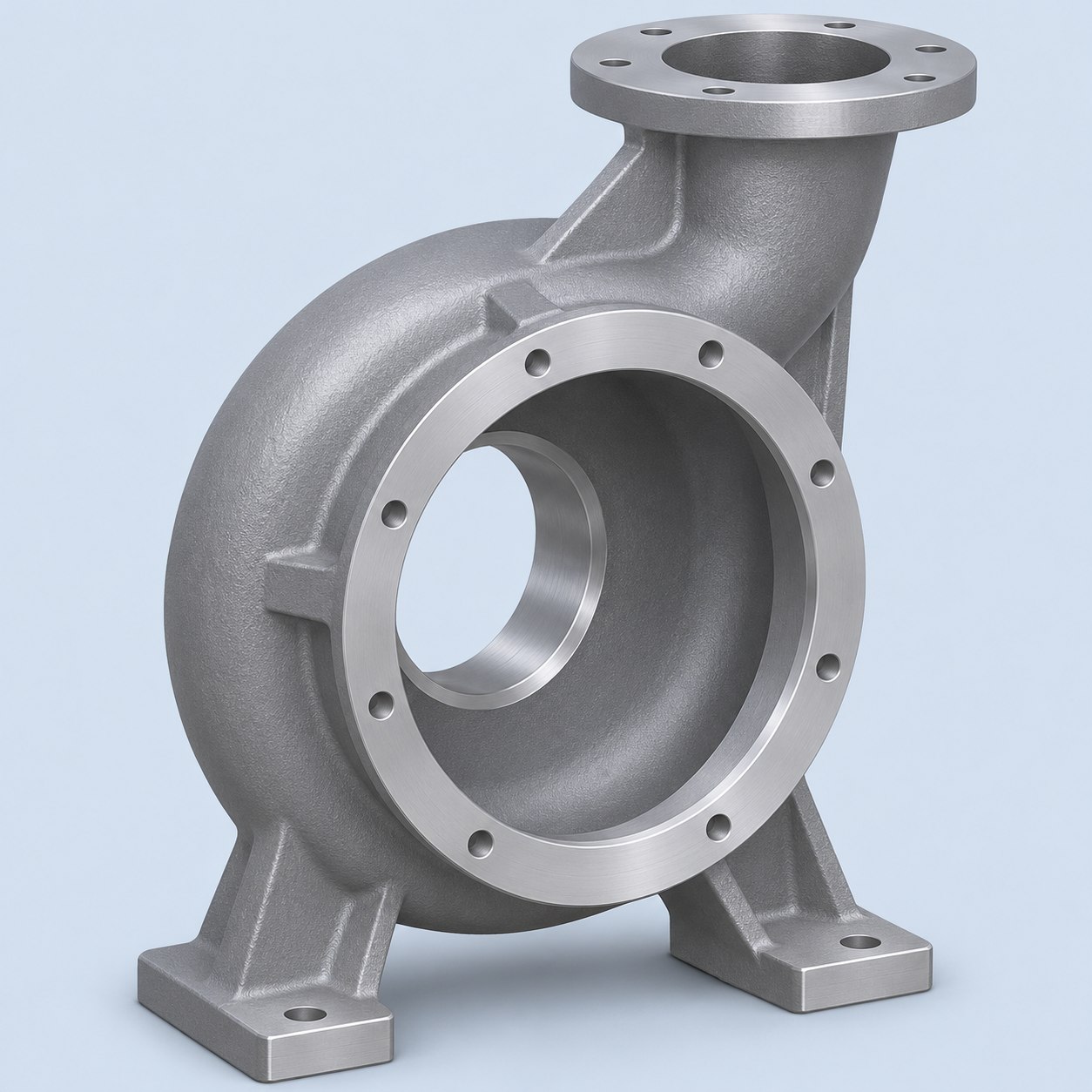
Identify the housing within the pump
State the pump reference, component position and whether the order is a replacement or a new design. Define what is included: raw casing, machined housing or a larger assembly. Do not leave the delivered condition to be inferred from the product name.
The custom centrifugal pump casing page illustrates a component type. It does not establish pressure capacity, flow performance or compatibility with an existing pump. Those require the approved design and relevant verification.
Give internal passages a controlled definition
Provide a model or drawing that defines the internal geometry, not just an outside elevation. Identify any passage areas that need particular control, cleaning or inspection. Discuss how the cavity will be formed and how core or shell material will be removed.
Where access is restricted, agree the practical evidence used to verify the required condition. A visual check through one opening may not cover an entire passage. Avoid asking for an undefined smooth interior without specifying what matters to function and acceptance.
Plan machining references early
Mark mounting faces, seal locations, bores and threaded connections on the finished drawing. Define the datum system that relates them. Ask the foundry and machining supplier to review stock and locating surfaces together.
A casting can contain enough material overall but still lack stock at a critical feature because of its position relative to the machining references. Sample inspection should therefore consider the relationship between raw and finished geometry, not just a few isolated outside dimensions.
Define material and verification scope
Provide the required material specification and service information to the design authority. If pressure or other functional tests are required, state the procedure, condition, acceptance criteria and responsible party. Do not infer a test pressure from a material name or catalogue category.
Dimensional inspection, material records and functional testing provide different evidence. The quotation should identify which are included. Keep any approved repair or concession controlled through the customer’s requirements rather than allowing an undocumented production decision.
Example: a machined bore with an unresolved raw reference
A housing may have ample overall metal but no agreed reference for locating its first machined face. That can make the relationship between the bore and internal passage uncertain. Review the raw casting and machining setup together before samples. Define how the initial references are established and how the final interfaces are inspected, rather than accepting the outer casting shape as sufficient evidence.
Control changes and repeat orders
For a new housing, agree the sample stage and the documents needed to release production. Record tool, model and drawing revisions. If the pump design changes, review passages and mating interfaces together rather than updating only the exterior model.
For repeat supply, retain the accepted sample references and inspection plan. Ask how parts and documents will be identified during packing. This helps the receiving team connect a delivered casing to the correct pump configuration without relying on visual similarity.
Enquiry checklist
| Housing feature | Specify |
|---|---|
| Passages | Geometry, formation, cleaning and verification access |
| Interfaces | Datums, seal faces, bores and threads |
| Delivered condition | Material, machining and required tests |
Review the pump and valve component category and send Foundry Queen the complete drawing set. A defined scope supports a meaningful supplier price and inspection agreement.
Technical reference
SFSA: Steel Castings Handbook, Supplement 2. This reference provides technical context; it does not establish Foundry Queen certification or project approval.
Get Premium Casting Products
Join FoundryQueen.com Newsletter to get more information of different premium OEM Casting products in China.