 By Coco
3-axis vs 5-axis machining should be compared through the work required on the actual component. Extra machine motion can improve access or reduce certain setups, but the axis count alone does not guarantee a better part. Foundry Queen focuses on features, holding and verification before choosing a manufacturing proposal.
List the surfaces that need access
Identify the faces, holes, pockets and profiles to be machined. Mark which can be approached from a common direction and which are obstructed. A simple part with accessible features may not benefit from a more complex machine arrangement.
For a part with several angled interfaces, additional orientation can be useful. The supplier should explain how it improves the process for those features. Avoid approving a route solely because a machine description sounds more advanced.
Distinguish indexed and simultaneous work
A multi-axis machine may reorient a component between operations, or move several axes together during cutting. These are different process strategies. Ask which is proposed and why it suits the geometry.
A quotation should identify the finished result rather than promising quality through terminology. The requirement remains the drawing, material and delivery condition. The supplier’s machine arrangement is part of the feasibility plan, not a replacement for acceptance evidence.
Review setup changes and datums
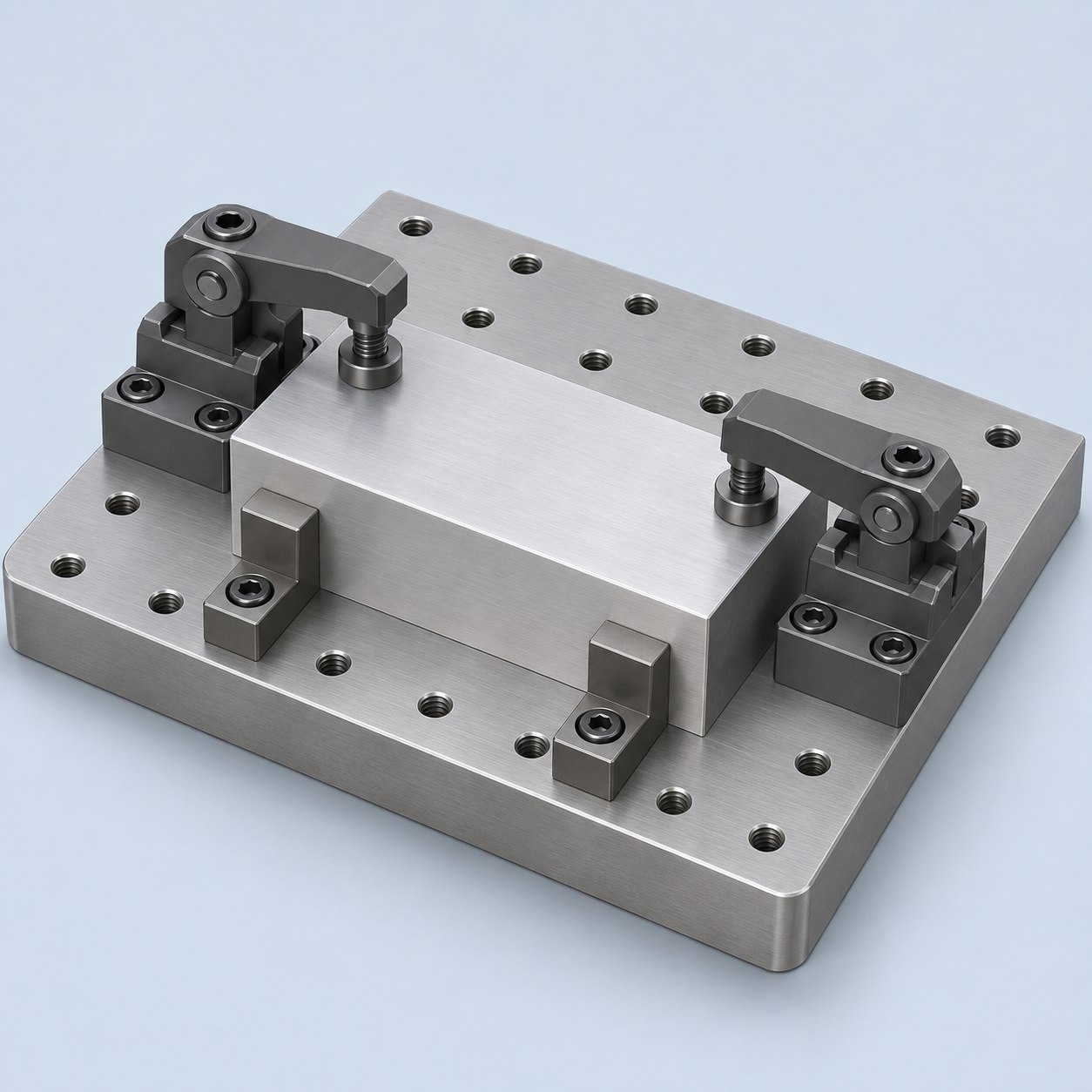
Every time a component is relocated, the manufacturing plan must preserve the required feature relationships. Reducing relocations can be useful, but the initial holding arrangement still needs to be stable and accessible.
The CNC workholding fixture category example highlights a related point: a capable machine still depends on suitable holding. A complex clamp arrangement can obstruct the very surfaces the additional axes are intended to reach.
Compare programming, tooling and quantity
For a one-off component, setup and programming effort may have a large effect on the total price. For repeated production, cycle time and tool management may become more important. Give the supplier realistic quantities and expected repeat demand.
Ask whether special fixtures, verification programs or long-reach tools are included. A proposal using fewer operations may still require more preparation. Compare the accepted finished component and the complete supply scope, not an hourly machine rate in isolation.
Example: several angled holes in one component
A part with holes approached from different directions may benefit from indexed orientation, but the advantage should be evaluated against holding and datum control. Ask how the supplier preserves the required relationships and what preparation is included. A quotation for a five-axis machine is not itself evidence that the holes meet their positional requirements; the inspection plan still needs to establish that result.
Verify the features that matter
Inspection should follow the drawing’s functional relationships regardless of the machine used. An integrated setup does not eliminate the need to measure critical dimensions or geometric controls. Define the reporting requirement before sample production.
For development parts, ask what the first trial must prove: access, geometry, surface condition or a production cycle. Keep those objectives separate. A visually impressive machined surface may not establish an accurate relationship between the assembly interfaces.
Enquiry checklist
| Comparison | Useful question |
|---|---|
| Access | Which features need extra orientation? |
| Setups | How are datums preserved through the route? |
| Cost | What programming, fixtures and verification are included? |
Discuss the model and quantities with Foundry Queen, using machinery component types for context. Choose the route for the part, not the axis count for its own sake.
Technical reference
Sandvik Coromant: milling application guidance. This reference provides technical context; it does not establish Foundry Queen certification or project approval.
Get Premium Casting Products
Join FoundryQueen.com Newsletter to get more information of different premium OEM Casting products in China.