 By Coco
Aluminum alloys for investment casting should be selected from the component requirements, not from the assumption that every aluminum grade can be supplied by every casting route. Alloy designation, product form and delivery condition all matter. Foundry Queen uses a drawing-based review to separate material selection from manufacturing feasibility.
Start with the component duty
Identify the required function, operating environment and relevant temperature or loading conditions. State which requirements are mandatory and which remain open for engineering selection. A generic request for lightweight aluminum does not establish the material specification.
Where a designer has already selected an alloy, provide the exact designation and applicable specification. Where selection is still open, request a proposal for review rather than asking the foundry to choose an unspecified best alloy. The design authority should approve any material change.
Distinguish cast and wrought designations
An alloy commonly purchased as plate or bar should not be assumed to have an identical cast equivalent. Cast and wrought products are specified differently, and the required condition must be appropriate to the production route. Do not approve a material solely because two names look similar.
The enquiry should identify the material standard, required delivery condition and supporting records. If a supplier proposes an alternative, compare the actual specification and requirements rather than accepting the word equivalent without explanation.
Review geometry with the foundry
Discuss section changes, internal passages, feeding access and the location of later machining. The selected alloy and geometry must be feasible together. A material recommendation that ignores the casting shape is incomplete.
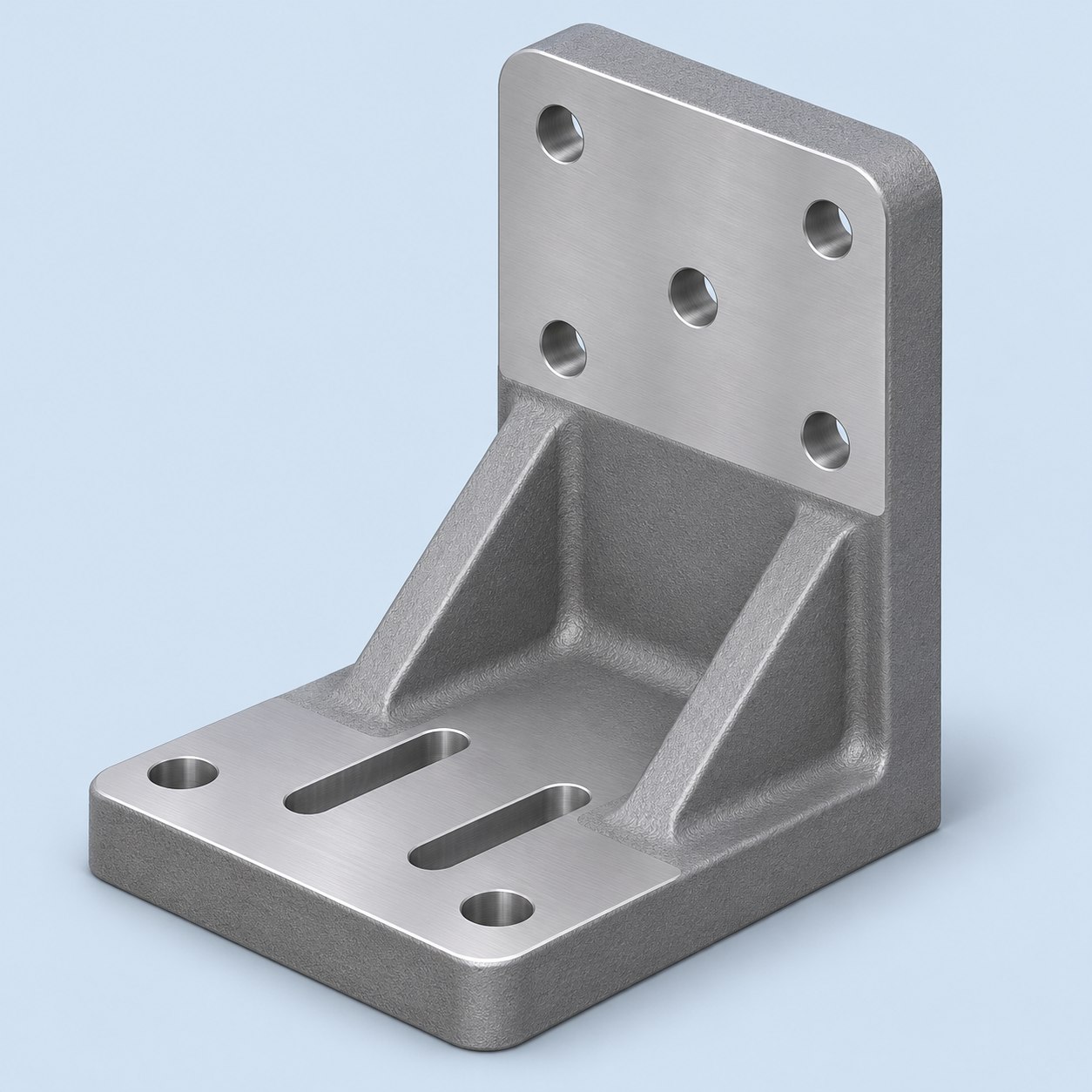
Use our aluminum casting category and the aluminum accessory example to frame the product discussion. These pages do not guarantee a particular alloy, property level or process capability for a new drawing.
Specify properties in the delivered condition
If mechanical properties or other characteristics are required, define the applicable test method, specimen basis and acceptance requirement. Typical handbook data are useful for comparison but should not silently become a guaranteed casting requirement.
Keep heat treatment, machining and finishing in the delivery description. A test result from a different condition may not answer the requirement for the finished component. Ask how the required evidence will remain linked to the supplied batch.
Example: a familiar alloy name proposed for a casting
A drawing developed around wrought stock may be sent to a foundry with the same shorthand alloy note. Before quoting, identify the appropriate cast specification and have the design authority review the material basis. Similar naming does not settle properties, treatment or inspection. Record any approved alternative explicitly so that a process change does not become an unnoticed change in the component requirement.
Compare complete manufacturing proposals
A quotation should identify the alloy, tooling, casting, subsequent work and inspection included. Compare accepted finished parts rather than raw metal price alone. A lower alloy cost may be offset by a different manufacturing or verification scope.
For samples, define what must be demonstrated before repeat production. Review dimensions, material records and the required functional evidence separately. Keep any approved concessions explicit so that a development sample does not become an ambiguous production standard.
Enquiry checklist
| Selection input | Required clarification |
|---|---|
| Material | Exact cast specification and condition |
| Component | Duty, model, interfaces and critical features |
| Evidence | Test basis, traceability and acceptance requirements |
Send the drawing and material requirement through Foundry Queen’s contact page. A clear specification lets the manufacturer assess the route without inventing a universal aluminum casting recommendation.
Technical reference
SFSA: Steel Castings Handbook, Supplement 2. This reference provides technical context; it does not establish Foundry Queen certification or project approval.
Get Premium Casting Products
Join FoundryQueen.com Newsletter to get more information of different premium OEM Casting products in China.