 By Coco
Balcony railing materials should be compared as complete systems operating in a defined environment. Metal, glass, coatings and fixings can each influence the result. Foundry Queen recommends evaluating how a material will be detailed and maintained, rather than assuming that one material name guarantees the best outcome for every balcony.
Describe the exposure honestly
Record whether the balcony is sheltered, rain-washed, coastal or affected by nearby industrial deposits. Identify places where water or debris can collect. The exposure at a concealed joint may differ from the exposure on the visible face.
The maintenance team should be involved before selection. A material that requires access for regular cleaning may be impractical where the external face cannot be reached. Compare the proposed maintenance method with the actual building access plan, not an idealized routine.
Compare the interfaces between materials
A railing may combine glass panels, metal supports, fasteners, inserts and coatings. Review each contact and joint, including how moisture drains and how incompatible contacts are managed in the approved detail. A strong primary member does not compensate for an unsuitable fixing interface.
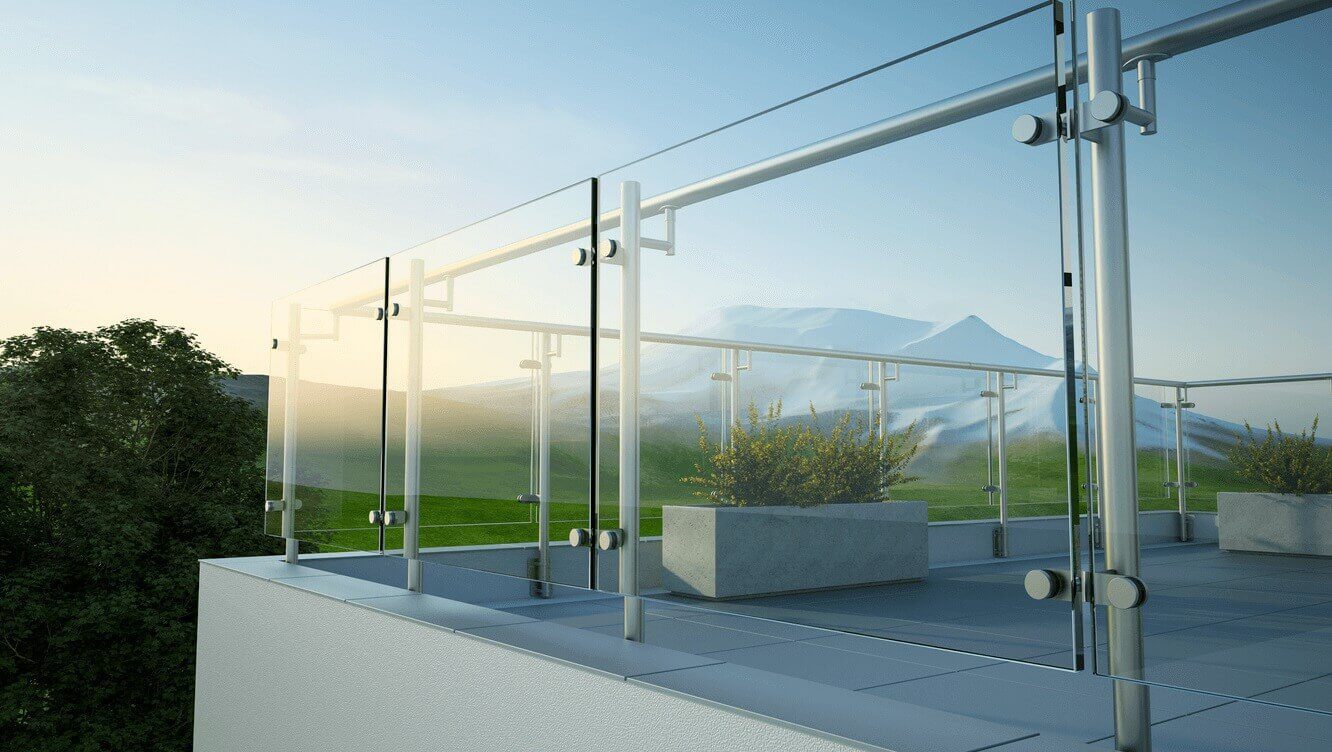
Our balcony and stair glass railing category shows one system family. The balcony glass railing page helps identify the arrangement, but the project still requires its own material and connection specification.
Keep appearance criteria measurable
State whether the desired finish is reflective, brushed, textured, painted or coated. Define the approved color or sample and the conditions for visual comparison. A term such as premium does not tell a manufacturer what surface to produce.
Glass appearance also needs coordination. Tint, edge finish and markings can change the visual result, while different metal sections can reflect light differently. Review the materials together where consistency matters. Keep cosmetic acceptance distinct from structural and material acceptance.
Evaluate maintenance and replacement
Ask how the selected material will be cleaned, inspected and repaired. Consider whether damaged covers, panels or fittings can be replaced individually. Retain model references and approved drawings so that future work does not rely on a visual guess.
For stainless steel, ASSDA emphasizes the combined role of environment, grade, finish and maintenance. The grade name alone is not an immunity claim. For coated materials, obtain compatible care instructions and a documented approach to damage rather than assuming all scratches can be repaired in the same way.
Example: a sheltered coastal balcony
A balcony can be exposed to airborne deposits while receiving little natural washing. Choosing a familiar metal grade without considering cleaning access leaves part of the decision unfinished. Compare the proposed finish, joint drainage and realistic maintenance plan with the exposure. The case does not establish a universal material choice; it shows why the building’s actual conditions belong in the selection discussion.
Compare the complete project scope
A cost comparison should include fabrication, finish, fixings, transport, installation and the required verification. Identify which services are included and which remain with the project team. Material weight or a single product price is only one part of that comparison.
The responsible designer must establish the applicable requirements for the balcony and approve the complete arrangement. Foundry Queen can discuss product supply against that requirement, but a buying guide should not prescribe a universal section size, glass thickness or load rating.
Enquiry checklist
| Decision area | Compare on the same basis |
|---|---|
| Exposure | Location, shelter, deposits and drainage |
| Appearance | Approved finish and coordinated samples |
| Ownership | Cleaning access, replacement and documentation |
Prepare a layout and material schedule, then contact Foundry Queen. A defined environment and acceptance plan make manufacturer and supplier proposals more useful than a generic request for the best railing material.
Technical reference
ASSDA: coastal corrosion and maintenance. This reference provides technical context; it does not establish Foundry Queen certification or project approval.
Get Premium Casting Products
Join FoundryQueen.com Newsletter to get more information of different premium OEM Casting products in China.