 By Coco
CNC machining vs investment casting is a comparison of manufacturing routes, not a contest with one permanent winner. A casting may still need machining, while a machined part may avoid casting tooling entirely. Foundry Queen recommends comparing the same accepted finished component at realistic quantities.
Define the common finished requirement
Use one approved drawing, material requirement and delivery condition for the comparison. Identify which surfaces need machining and which may remain as produced. Without that common endpoint, two quotations may cover different products.
A near-net casting price should not be compared directly with a fully machined and inspected part. Include the later operations needed to reach acceptance. Likewise, include any special fixtures, material preparation and inspection required by the machining-only route.
Examine geometry and material use
A component with complex external form or passages may be worth reviewing for casting. A simple accessible shape may machine efficiently from stock. The comparison depends on what material must be removed and what features are difficult to create.
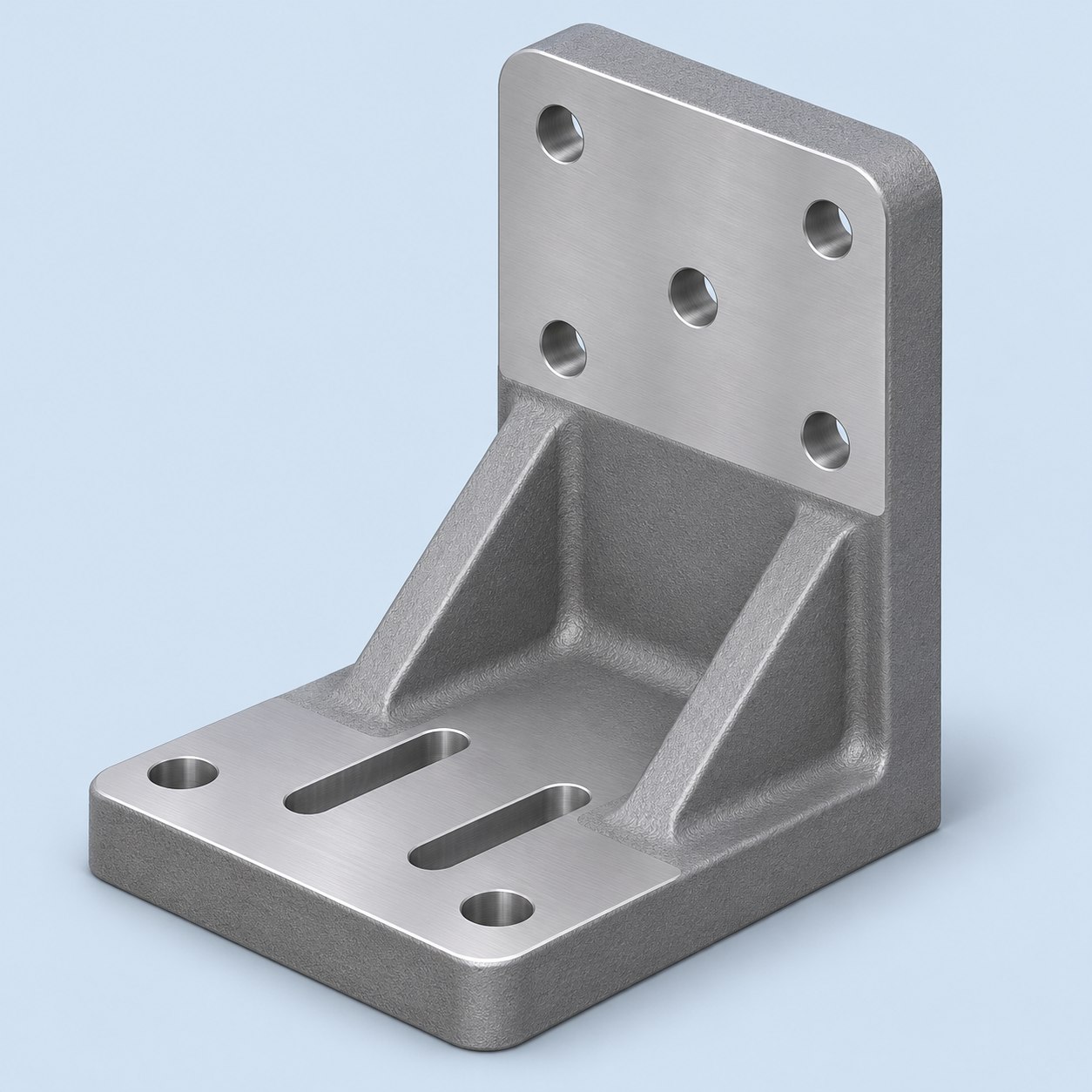
The custom mounting bracket example can be discussed through either route at a conceptual level. Its illustration does not establish that every bracket design is feasible or economical by the same process.
Include tooling and development
Casting tooling and sample approval create work before repeat production. Machining may also require dedicated holding or programming. Separate one-time preparation from recurring work and state how it changes with quantity.
Do not invent a universal break-even quantity. The shape, alloy, tooling, inspection and supply chain determine the actual comparison. Ask both proposals to identify assumptions so that a change in demand can be evaluated without starting from an unexplained total.
Review properties and process changes
A change from wrought stock to a casting can change the applicable material specification and verification basis. Similar alloy names do not automatically establish identical properties or acceptance requirements. The design authority should approve the material and route.
A machined prototype can help verify interfaces, but it does not validate casting soundness or the proposed foundry process. If production will use a different route, plan the relevant samples and evidence rather than treating the prototype as complete manufacturing approval.
Example: a machined prototype followed by cast production
A prototype may prove that the mounting interfaces fit the assembly while leaving the casting route untested. Before changing production, review the material specification, stock, tooling and casting acceptance separately. The prototype remains useful evidence for the questions it answered. It should not be used to claim that the new manufacturing route has already been validated.
Compare delivery risk and revision control
Consider the time needed for tools, samples, revisions and final inspection, not just the quoted production cycle. A design likely to change may benefit from a different initial route than a stable repeated component. State that uncertainty in the enquiry.
For repeat orders, retain the accepted process scope and controlled drawings. If a supplier proposes a new route later, review it as a change with potential effects on material, dimensions and evidence. A lower piece price should not silently authorize a different component definition.
Enquiry checklist
| Cost comparison | Include |
|---|---|
| Common output | Same material basis and finished acceptance |
| Preparation | Tools, fixtures, programming and sample approval |
| Recurring supply | Casting or stock, machining, finishing and reports |
Discuss the drawing and quantities with Foundry Queen. The machinery component range is a starting point; the comparison should finish with a project-specific manufacturing plan.
Technical reference
Sandvik Coromant: milling application guidance. This reference provides technical context; it does not establish Foundry Queen certification or project approval.
Get Premium Casting Products
Join FoundryQueen.com Newsletter to get more information of different premium OEM Casting products in China.