 By Coco
Glass handrails combine long sections with small connecting parts that determine how the assembly fits together. A straight tube length is easy to count; corners, returns and support transitions are easier to overlook. This Foundry Queen guide focuses on connection planning so that a handrail enquiry describes a complete route.
Draw the route and its changes
Use plan and elevation views to mark straight runs, slopes, corners, ends and transitions. Identify the reference dimensions used for fabrication. A centerline sketch should distinguish the actual handrail route from nearby glass edges and supporting posts.
Assign a reference to every junction. This makes it possible to count elbows, sleeves, brackets and end pieces without relying on a photograph. It also helps the installer identify where each part belongs when similar components arrive in separate packages.
Match profiles and connectors
State whether the tube is round, square, slotted or another profile. Include the relevant dimensions and wall specification on the drawing. A connector with a similar exterior size may not fit a different internal profile.
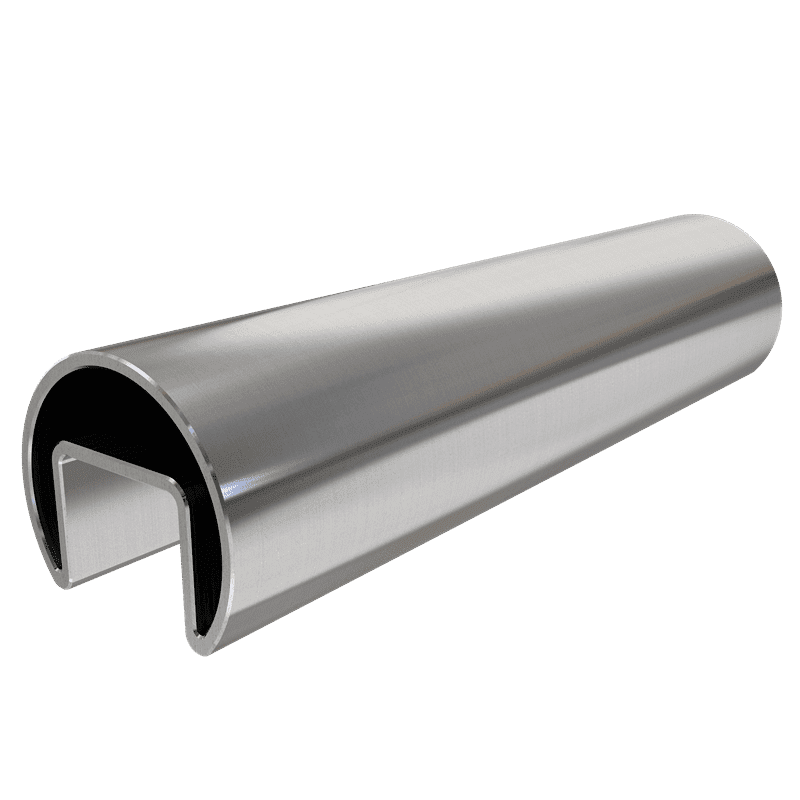
Review slot fittings alongside elbow connectors. The LS-S01 slotted round tube illustrates why the section form should be named explicitly rather than described simply as railing tube.
Resolve bracket interfaces
Identify whether each bracket fixes to a wall, post or glass. Confirm the mating surface, fixing pattern and assembly access for the exact model. The bracket and supporting construction must be reviewed together; decorative finishes do not establish structural support.
Where a bracket connects to glass, coordinate the panel preparation and the permitted assembly details with the system designer. Do not adapt a wall bracket to glass or reverse a fitting’s intended use without approval. A connection drawing should show the complete interface.
Plan ends and movement joints
The handrail route needs defined end conditions, not unfinished cut lengths. Mark returns, caps and interfaces with adjacent structures. Confirm how separate sections connect and how required movement is accommodated in the approved design.
Installation sequencing matters at confined locations. Ask whether a sleeve or connector can be assembled after neighboring panels are installed. A detail that requires sliding a long tube through an inaccessible opening should be resolved before manufacturing lengths are finalized.
Example: an elbow that fits the outside profile
A connector may look the right size next to a tube but have a different internal mating geometry. Checking the external outline alone will not reveal the mismatch. Use the tube section drawing and exact connector reference together, then confirm the assembly method and clearance. A sample joint can support that review, but its approved configuration should still be recorded for production and replacement orders.
Approve finish and fabrication scope
Clarify whether the order covers stock lengths, cut pieces, machined ends or assembled sections. State which party performs drilling, welding, finishing and site adjustment. These differences can dominate a price comparison even when the raw tube is identical.
Keep finish references consistent across tube, elbows and brackets. Retain an approved sample where appearance matters, and protect the finished surfaces during packing. The final schedule should identify every component with its drawing revision and location so that future replacement remains possible.
Enquiry checklist
| Layout item | Parts to identify |
|---|---|
| Straight run | Profile, length and support positions |
| Change of direction | Exact elbow or adjustable connector |
| End or transition | Return, cap, sleeve and approved fixing detail |
Send the route drawing and connection schedule to Foundry Queen. A complete route helps the supplier quote the right pieces and reduces missing-part decisions on site.
Get Premium Casting Products
Join FoundryQueen.com Newsletter to get more information of different premium OEM Casting products in China.