 By Coco
Internal corner radius is a design detail with a direct connection to milling access. A rotating cutter cannot create every sharp internal corner shown in a model by ordinary milling. Foundry Queen recommends identifying the corner’s functional purpose before prescribing a geometry that unnecessarily restricts the manufacturing route.
Ask what the corner must accommodate
Determine whether the radius provides clearance, locates another component or simply follows the shape of the model. The required function may allow a larger radius or a local relief. Record that freedom explicitly rather than expecting the supplier to guess.
If a mating square part must seat in a pocket, review the entire interface. Clearance at the corner may be solved differently from clearance along the walls. Any relief or geometry change needs design approval, especially where it affects contact or remaining material.
Consider depth and tool reach together
A small corner radius can require a smaller cutter, while a deep cavity can require greater reach. That combination may make the operation less stable or more time-consuming. The design review should therefore consider the corner in section, not only in plan view.
Do not adopt a universal radius-to-depth ratio from a general article as a production guarantee. Ask the machining supplier to assess the actual material, access, tool arrangement and required finish. Their proposal should identify any feature that drives a special operation.
Keep floor and wall radii distinct
The radius between two vertical walls is a different feature from the radius where a wall meets the pocket floor. They may require different tool geometry and evaluation. Dimension the intended feature clearly so that a label such as R3 does not leave the location ambiguous.
Where the function permits it, simplify the corner definition and avoid unnecessary tight tolerances on nonfunctional blends. A model can contain a precise mathematical surface without requiring every point to carry the same manufacturing tolerance.
Compare alternatives before release
Possible alternatives may include a larger corner, an approved relief, a split component or a different manufacturing operation. Each changes the cost and may change function. Compare them through a controlled drawing review rather than allowing an unrecorded shop adjustment.
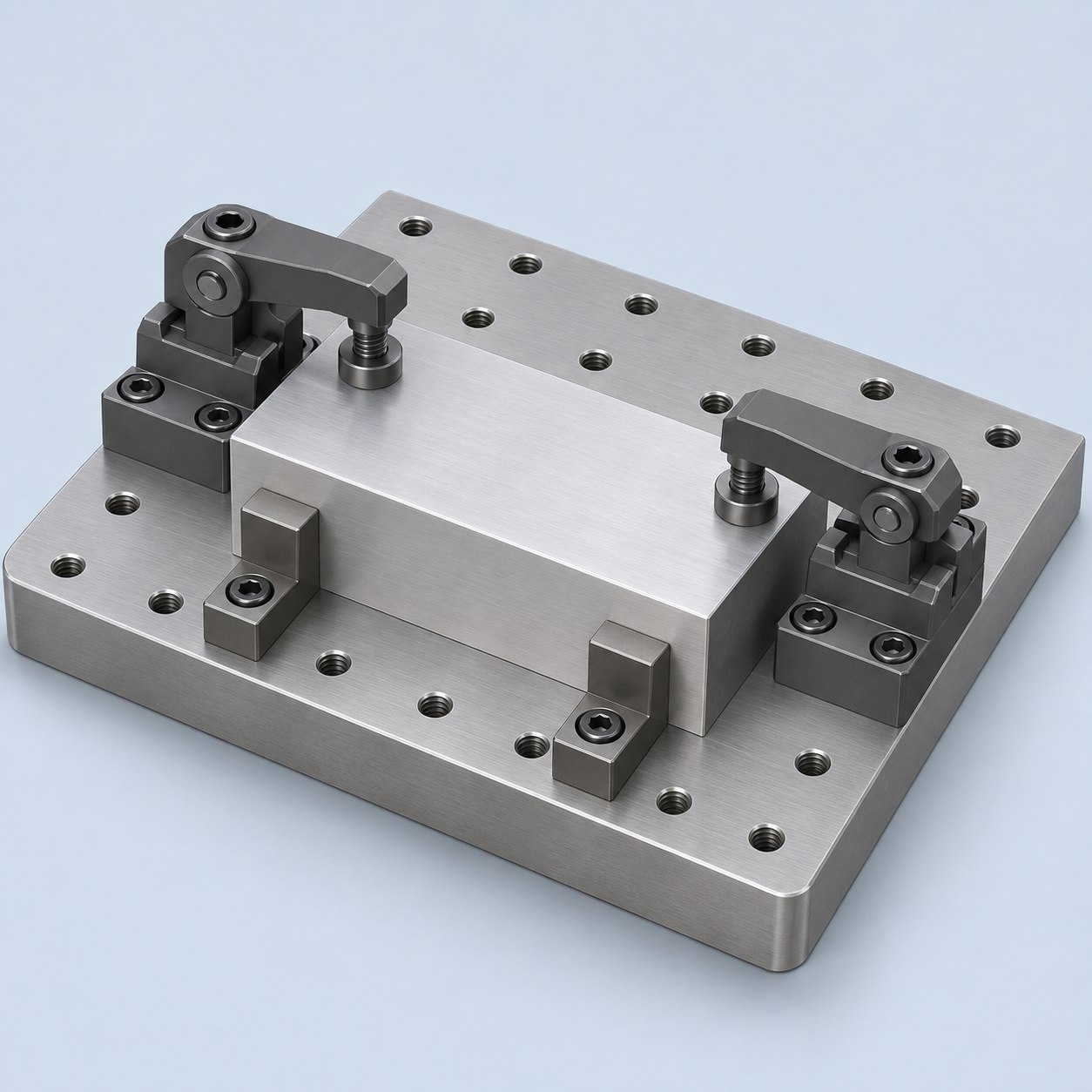
The custom fixture product type and machinery mounting bracket example are useful contexts for locating pockets and clearances. They do not establish a minimum machinable radius for a new part.
Example: a pocket receiving a square insert
A pocket may need to receive an insert with square outside corners. Requiring a perfectly sharp milled internal corner is not the only possible design response. The designer may approve clearance relief or revise the mating corner. Compare those options against contact and locating needs before manufacturing. Record the accepted geometry so a sample’s hand modification does not become the only definition.
Define how the corner will be accepted
If the radius is important to fit, specify the relevant size, location and surface requirements. If it is only a clearance feature, state the allowed envelope. This gives inspection a functional target and avoids rejecting a usable part for an irrelevant cosmetic difference.
For prototypes, test the mating arrangement using the approved geometry. A hand-finished sample can conceal a production problem if the finishing method is not included in the repeat plan. Record any special operation and its acceptance basis before ordering a batch.
Enquiry checklist
| Corner feature | Review |
|---|---|
| Function | Clearance, location or nonfunctional blend |
| Manufacture | Depth, reach, material and available access |
| Acceptance | Required envelope, radius and mating check |
Send the model and mating-part information to Foundry Queen. Early corner review helps compare machining proposals on function and finished-part cost.
Technical reference
Sandvik Coromant: milling application guidance. This reference provides technical context; it does not establish Foundry Queen certification or project approval.
Get Premium Casting Products
Join FoundryQueen.com Newsletter to get more information of different premium OEM Casting products in China.