 By Coco
Low-volume CNC machining is not simply mass production with fewer pieces. Programming, setup, material purchasing and inspection preparation can represent a large share of the order. Foundry Queen recommends explaining the purpose of the small batch so that the manufacturing plan fits the decision it needs to support.
State why the quantity is small
A prototype, a service replacement and a recurring small production batch have different priorities. A prototype may need rapid feedback on an uncertain interface. A service part may need to match an existing approved design. Repeat small batches may benefit from stable fixtures and retained programs.
Tell the supplier which situation applies and whether more orders are expected. Do not promise high future volume merely to obtain a lower sample price. Realistic information supports a useful proposal and avoids unnecessary tooling.
Freeze the minimum usable drawing
Identify the features that must be correct for the batch to serve its purpose. Resolve material, interfaces and mandatory tolerances before release. Where a feature is still experimental, label the uncertainty and define who approves the next revision.
A model alone may omit threads, surface requirements and acceptance notes. Provide the supporting drawing and use a clear revision reference. The supplier should not have to reconstruct the functional requirement from a series of informal messages.
Compare preparation and repeat costs separately
Ask the quotation to distinguish programming, fixtures, material setup and per-piece work where useful. A repeat order may cost differently if preparation can be reused, but that reuse should be confirmed rather than assumed.
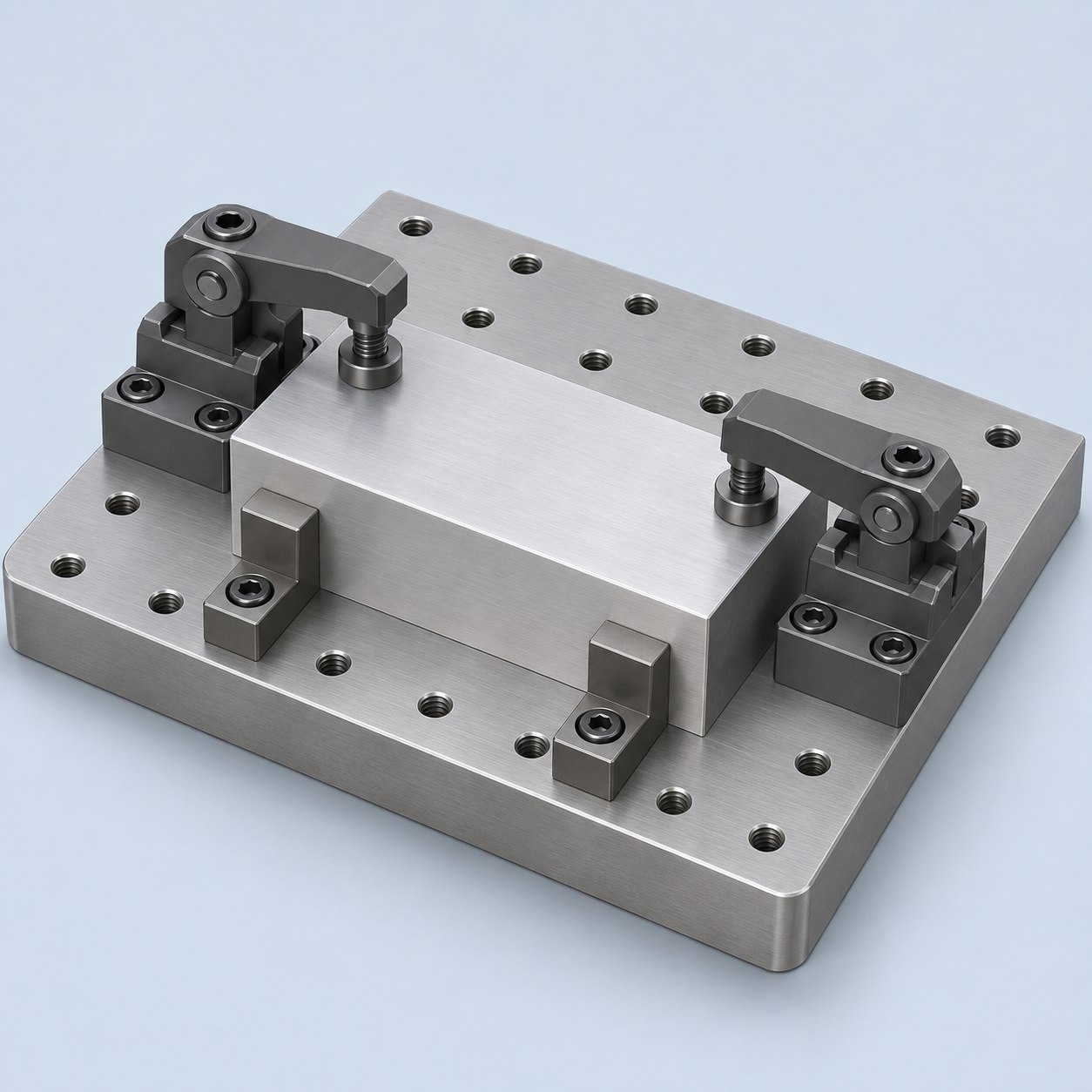
The workholding fixture page illustrates a related investment. For a small quantity, a dedicated fixture may or may not be justified. Evaluate it against stability, access and likely repeat use, not only the immediate piece count.
Choose an inspection scope that supports the purpose
Define what must be reported on the sample or batch. A development part may need detailed feedback on selected features, while an approved replacement may require evidence against the full acceptance plan. Keep inspection effort connected to the decision.
Ask how the parts will be identified and whether results apply to individual items or a sample. A single report should not be presented as evidence that every piece was measured unless that work was actually performed.
Example: a small order expected every quarter
A recurring ten-piece order may justify retained programs or a dedicated holding arrangement that would be unnecessary for a one-time visual prototype. State the realistic repeat pattern in the enquiry. Ask what preparation is reusable and how storage or revisions are handled. This separates an investment in stable repeat supply from work that only supports the first trial.
Retain what is needed for the next order
After acceptance, keep the final drawing, approved deviations, material requirement and report format together. Confirm which programs or fixtures the supplier retains and how changes are controlled. A repeat order should not begin by rediscovering the first order’s assumptions.
For a component that may move to casting later, record which features and requirements have been validated. A machined prototype can prove fit without proving the future casting route. Treat the transition as a new manufacturing review rather than a simple price reduction.
Enquiry checklist
| Small-batch purpose | Plan accordingly |
|---|---|
| Prototype | Define the question and expected feedback |
| Replacement | Confirm the approved design and interfaces |
| Repeat small batch | Retain revisions, fixtures and reporting requirements |
Browse custom machinery components for product context and send Foundry Queen the batch objectives. A clear purpose makes a low-volume machining quotation more useful.
Technical reference
Sandvik Coromant: milling application guidance. This reference provides technical context; it does not establish Foundry Queen certification or project approval.
Get Premium Casting Products
Join FoundryQueen.com Newsletter to get more information of different premium OEM Casting products in China.