 By Coco
Narrow-cavity impellers present a manufacturing question that is easy to miss in an external rendering: how will the internal passage be formed, cleared and verified? A cavity that exists in a model may still be difficult to manufacture consistently. Foundry Queen recommends addressing access before the casting tool and inspection plan are fixed.
Define the passage, not just the outside diameter
Provide the internal model, blade arrangement and relevant sections. Identify entrances, exits and regions with limited access. Mark which passage features are functionally critical and which may follow a general casting requirement.
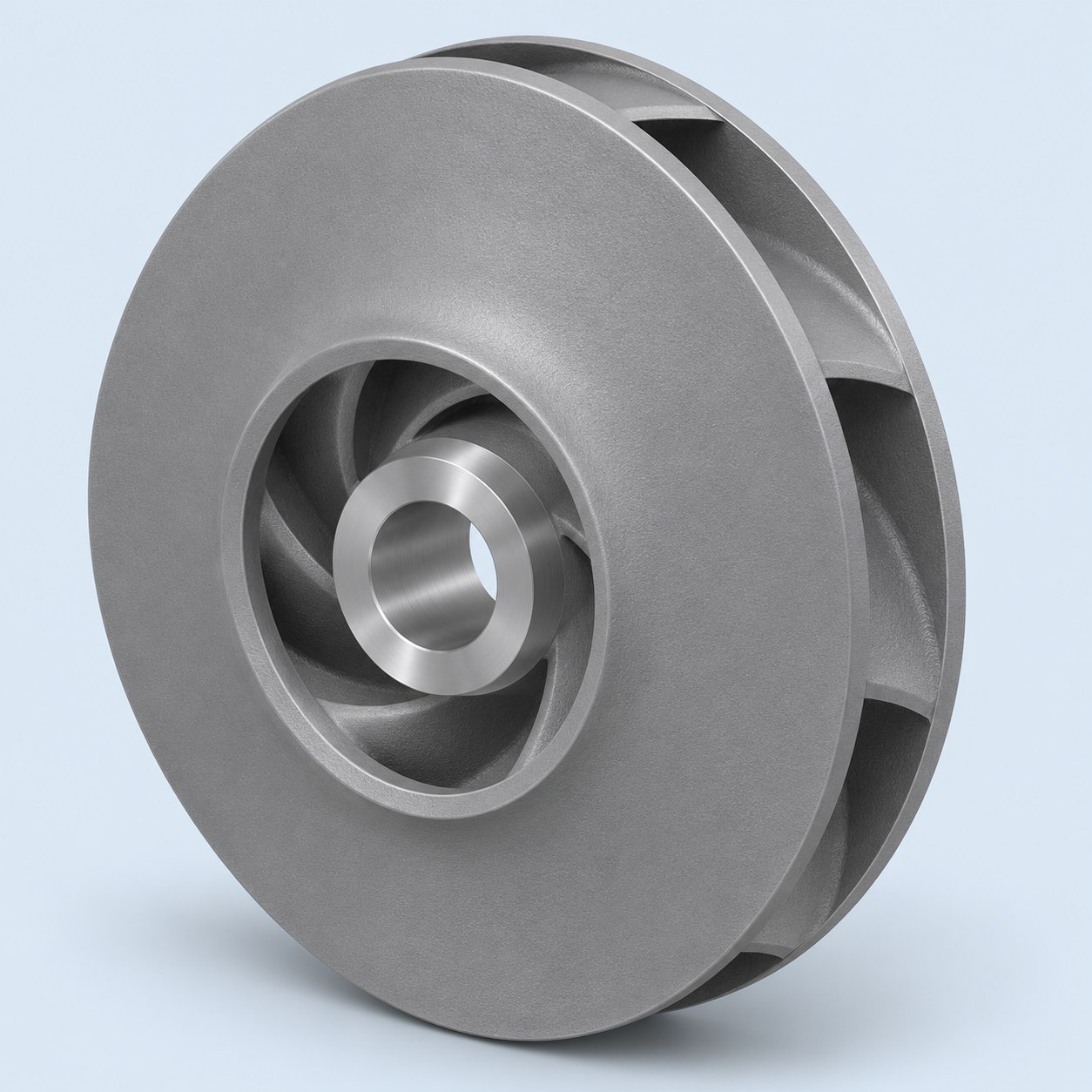
An exterior image cannot show the complete cavity. The closed pump impeller example illustrates a product type, but a new design needs its own internal definition. Do not infer a manufacturing limit or performance result from the illustration.
Ask how the cavity will be produced
The proposed route may involve cores or other process-specific methods. Ask the foundry to explain how the internal form is positioned and maintained through production. The answer should be tied to the actual alloy, geometry and quantity.
Discuss any proposed design changes before tooling. An access opening, section change or alternative assembly can affect function as well as manufacture. The design authority should approve the change on the controlled drawing rather than allowing a shop-floor workaround.
Plan removal and cleaning as real operations
After casting, mold or core material must be removed to the specified condition. Ask what access exists for that work and how difficult regions will be addressed. A general cleaning step in a process list is not enough when the cavity cannot be reached easily.
Define the delivered cleanliness requirement and its verification method. Avoid an unmeasurable instruction such as perfectly clean inside. The required evidence may differ with the application and should be agreed by the responsible engineering and quality teams.
Separate passage inspection from other rotor checks
A dimensional check of the hub and bore does not establish the condition of every internal passage. Likewise, a balance result does not prove internal cleanliness or passage geometry. Give each requirement its own inspection or verification basis.
Consider how the sample will demonstrate feasibility before repeat production. Where destructive assessment or another special method is proposed, agree the sample quantity and acceptance use in advance. A single favorable photograph should not become the only evidence for a recurring production feature.
Example: cleaning completed before the last machining step
A rotor may be cleaned after casting and then receive machining that introduces new chips into a narrow passage. The earlier cleaning record does not establish the delivered cavity condition. Review the complete sequence and identify when final cleaning and verification occur. Keep that stage in the supply scope so the receiving team does not rely on evidence from an unfinished part.
Keep subsequent operations in view
Machining, finishing and handling can introduce debris after the casting has been cleaned. The final delivery condition should therefore consider the complete manufacturing sequence. Identify when the last cleaning and verification occur.
For repeat orders, retain the approved process scope, tool revision and sample records. If the cavity or blade geometry changes, review access again. A small model change can make a previously workable removal or inspection method unsuitable.
Enquiry checklist
| Cavity review | Question to settle |
|---|---|
| Formation | How is the internal shape created and located? |
| Removal | How can mold or core material leave every required area? |
| Verification | What evidence covers the final passage condition? |
Review impeller and rotor components, then send Foundry Queen the internal model. Early access review is more useful than discovering an inaccessible passage after a tool has been purchased.
Technical reference
SFSA: Steel Castings Handbook, Supplement 2. This reference provides technical context; it does not establish Foundry Queen certification or project approval.
Get Premium Casting Products
Join FoundryQueen.com Newsletter to get more information of different premium OEM Casting products in China.