 By Coco
Resin sand casting uses a bonded sand mold system, but that description leaves many production choices open. The binder route, pattern arrangement, core requirements and alloy all affect the practical proposal. This Foundry Queen guide helps buyers request a defined process scope rather than relying on the phrase resin sand as a quality guarantee.
Ask which mold system is proposed
Have the foundry identify the actual molding and curing route it plans to use. Resin-bonded sand covers more than one arrangement, so quotations should not be compared on the assumption that the name describes identical equipment or process control.
The buyer usually needs to define the required casting and acceptance condition, while the foundry proposes its production method. If a specific mold route is mandatory, state the reason and requirement in the enquiry. Otherwise, leave room for a documented alternative that meets the component specification.
Review the pattern and parting arrangement
The pattern establishes a production geometry related to, but different from, the finished machined component. Discuss the parting arrangement, access and features that require separate cores. Keep the proposed tooling drawing under revision control.
Mark cosmetic and functional surfaces. A parting line or gate-removal area may be acceptable on one face and inappropriate on another. Resolve those positions before tooling approval instead of asking for an undefined perfect casting after the tool has been made.
Give cores their own review
Internal cavities and passages need a feasible formation and removal plan. Ask how cores are positioned and what access is available to remove sand and inspect the passage. A cavity shown in a solid model is not automatically a practical foundry feature.
The custom core box page and production tooling category illustrate related tooling types. Actual dimensions, tooling materials and life requirements must be agreed for the project.
Separate casting and machining requirements
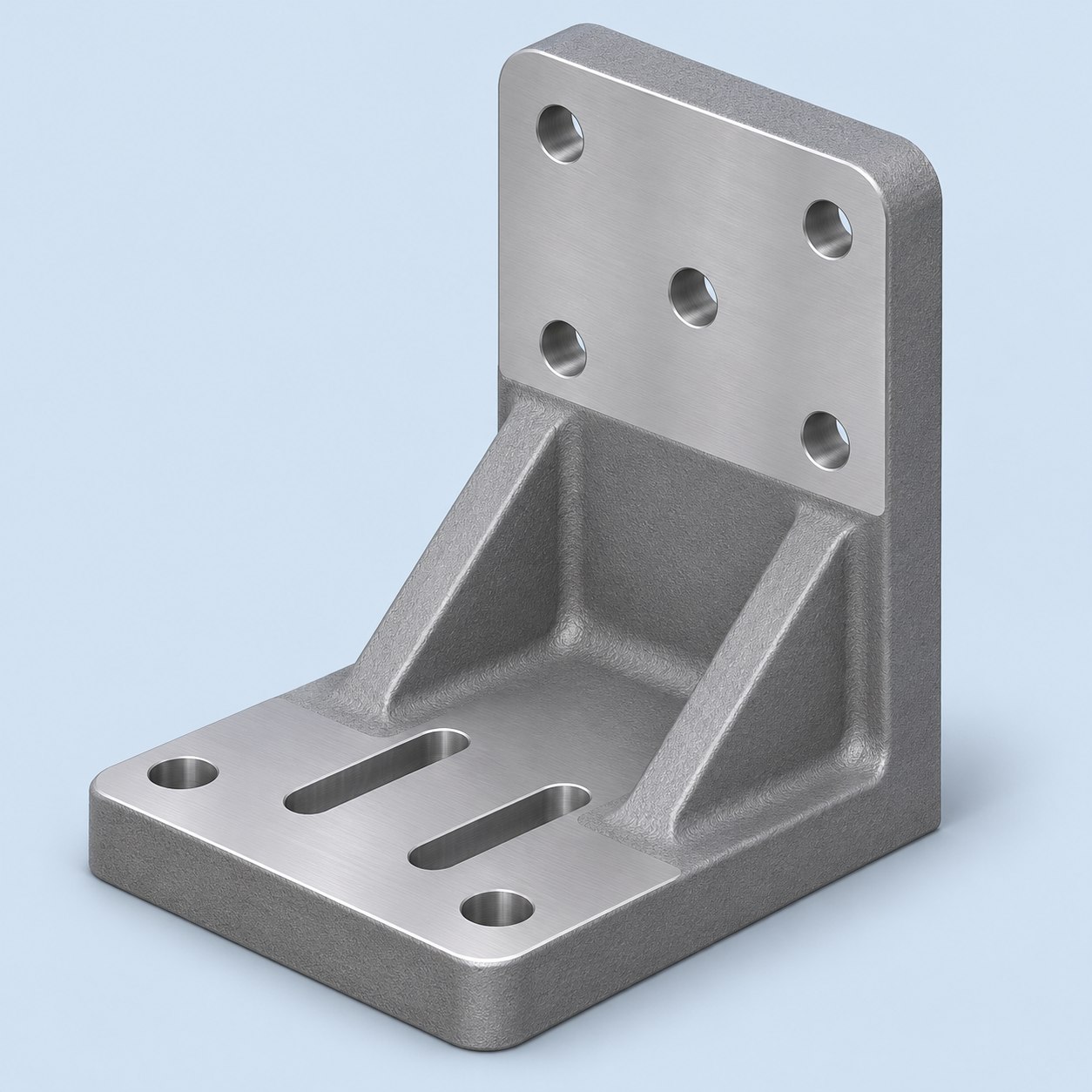
Identify which surfaces may remain as cast and which must be machined. Define datums and necessary stock rather than applying a tight finished tolerance to every raw surface. The foundry and machining supplier should review the same revision.
For a housing, a mounting face and bearing bore may need a controlled relationship that the raw outer shape does not. Plan those features together. This avoids accepting a casting that has insufficient stock or an unsuitable reference for the later machining sequence.
Example: a passage with no defined removal access
A housing model may show an enclosed cavity but provide no practical route for removing the core material. Ask the foundry to review the cavity sections before tool release. An approved geometry change may be needed, but it must remain consistent with the component’s function. Resolve the formation, removal and inspection plan together instead of leaving cleaning as an unspecified final operation.
Agree evidence and repeat-order control
Specify the material condition, dimensional checks and any required examinations, with acceptance criteria appropriate to the component. Do not treat mold type as a substitute for inspection. A process label cannot prove the absence of internal discontinuities.
Record tool ownership, storage, maintenance and change approval. A repeat order should identify the tooling and drawing revision, quantity and inspection plan. Ask how samples will be identified and what approval is required before production continues.
Enquiry checklist
| Review stage | Decision to record |
|---|---|
| Mold and pattern | Proposed route, parting and critical surfaces |
| Internal geometry | Core positioning, removal and inspection access |
| Delivered casting | Material, machining stock and acceptance plan |
Discuss the component family and drawing with Foundry Queen. A clear specification supports a meaningful foundry price without assuming that all resin sand processes deliver the same result.
Technical reference
SFSA: Steel Castings Handbook, Supplement 2. This reference provides technical context; it does not establish Foundry Queen certification or project approval.
Get Premium Casting Products
Join FoundryQueen.com Newsletter to get more information of different premium OEM Casting products in China.