 By Coco
Shell mold casting generally refers to forming a shell mold from resin-coated sand against heated tooling. It should not be confused with the ceramic shell route used in investment casting. Foundry Queen recommends naming the intended process clearly before comparing cost, tooling or sample proposals.
Remove the ambiguity in the word shell
Ask the supplier to describe the mold material and production sequence. A reference to shell casting can otherwise mean different processes to different buyers. Record the agreed route in the quotation and drawing review.
The distinction matters because pattern preparation, parting and internal-feature methods differ. A component suitable for one route may need changes for another. Avoid using a generic process name to imply that the same tooling or dimensional expectations apply to both.
Review geometry against the actual tool
Identify the intended parting arrangement and discuss whether the geometry can be released from the proposed tooling. Mark recesses, bosses and features that may create access problems. Ask the foundry to highlight changes before the design is frozen.
A dimensional model describes the desired component, not every production allowance. Keep the finished-part definition separate from the approved casting and tooling definitions. Changes to draft, machining stock or gate locations should be visible and approved rather than introduced informally.
Plan internal features and cores
Where a component contains passages or hollow sections, ask how these will be formed and supported. Include the core-removal and cleaning access in the review. The selected method must allow the delivered part to meet its specified condition.
For a housing or cover, consider whether a feature is better formed during casting or machined later. This is a project trade-off involving access, quantity and functional requirements. A blanket instruction to cast every feature can make an otherwise practical component unnecessarily difficult.
Specify the delivered surface and dimensions
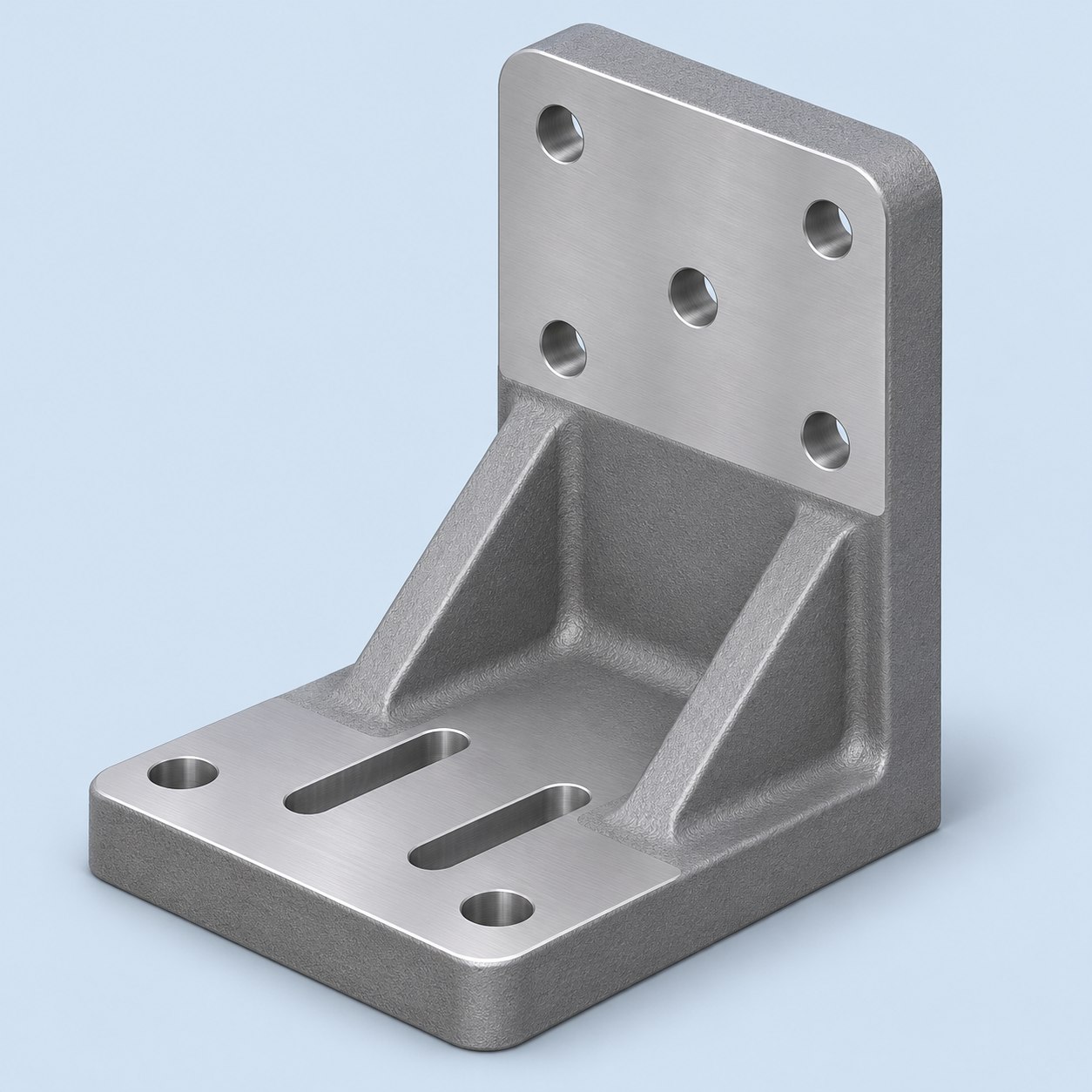
Identify as-cast surfaces, machined interfaces and finish requirements separately. A visually smooth casting still needs dimensional evidence where fit or function requires it. Define the inspection references used to relate the important features.
Our custom machinery casting category and cast end cover page provide component examples for discussion. They do not establish a universal tolerance or surface condition for all shell molded parts.
Example: two quotes using the word shell
One supplier may describe a resin-sand shell route while another describes a ceramic investment shell. Their quotations can therefore differ in tooling and production assumptions even when both use the same short label. Ask each supplier to name the mold system and delivered condition. The comparison should then return to the actual component requirement, rather than assuming the process names describe identical work.
Compare tooling and production together
A quotation should separate one-time tooling, sample work, repeat casting, machining and required records. State the expected quantity and likely repeat demand. A route that appears attractive at one quantity may have a different cost balance at another.
Before production, agree sample identification, dimensional approval and the handling of deviations. Keep tool ownership and revision control documented. The useful result is a repeatable supply agreement for the component, rather than a claim that one casting process is inherently best.
Enquiry checklist
| Question | Clarification |
|---|---|
| Which shell process? | Resin-coated sand route or ceramic investment shell |
| Which features are cast? | Parting, cores and later machining |
| What is included? | Tooling, samples, finished condition and reports |
Send Foundry Queen the drawing and intended delivery condition through our enquiry page. We can discuss process feasibility without borrowing another factory’s performance claims.
Technical reference
SFSA: Steel Castings Handbook, Supplement 2. This reference provides technical context; it does not establish Foundry Queen certification or project approval.
Get Premium Casting Products
Join FoundryQueen.com Newsletter to get more information of different premium OEM Casting products in China.